A Single Breath

A whale surfaces. Exhales. Foul air spumes thirty feet high. The droplets fall, winking with sunlight beneath the blue sky. The whale draws a fresh breath. It flows crisp and cool into his lungs before he slides back beneath the waves. He doesn’t dive, just lets himself slowly sink, using his flippers and fluke only for balance.

This whale is old, tired. He hasn’t eaten in a while. He wants to rest. No other whales are around. He’d been swimming with a small pod but had fallen behind. That doesn’t seem to matter.

The water is a clear and diffuse yellow here just beneath the surface. It glows warm from the sun and the whale wants to hang onto that warmth. But the effort required to do so is tremendous. He sinks a little further, his flippers stroking fitfully at the water.

Yellow light turns green, then turquoise. The water cools a little. It’s like a vast liquid gem, flawed with bubbles and whorls of current. There are no fish, no krill. He is at the center of the turbulence. Then the turbulence dies away. The green water darkens toward emerald. He sinks.

How much farther does he need to travel to reach the krill fields? Will there be anything left when he arrives? Will any of the other whales still be there? His flippers stir, then still.

He sinks a little more. The water is purple now, like twilight at the surface. But unlike at the surface, there is no wind, no roughness of waves. The ocean has a silken stillness to it. A memory comes. His first mate. Her flank brushed his, sometimes as silken as this ocean, sometimes so barnacled-rough that it scratched his flesh.

The memory passes. The ocean darkens. He drowses.

The world is black when he awakens. He drifts through a formless void. A faint pressure in his lungs lets him know that he will need to rise soon. He will have to breathe, and the surface is a long swim away now.

Then light distracts him, glittering, dancing light. He recalls youthful nights, broaching beneath a festival sky strewn with stars. A song stirs deep within but does not pass his throat. These lights are not stars; they are luminescent plankton stirred by his decent through their level. And he is not young. There is no song left.

The moment is here. He must swim now or never swim again. The surface is far away; his lungs begin to strain. Working his fluke and flippers, he begins to rise. Then he stops. The plankton have drifted away from him. He is in blackness again. Alone. The water is cold, cold.

All tension bleeds from his body. He sinks. Deeper and deeper. At some point he exhales. And the bubbles rise. In a while they will burst on the surface, and there will never be more.

~ Charles Gramlich

© Copyright Charles Gramlich. All Rights Reserved.

Damned Words 44

Five-fingered Footprints
Lee Andrew Forman

Blood draws my story on the agate floor. Fresh ink covers dried layers with the repetition of time. My five-fingered footprints scatter across my canvas, for within the cold box there is no room to stand. My freedom, nothing more than an arm’s length in any direction. Slight rumbles shiver the enclosure; new paint will be added soon. I’ve never seen the thing that keeps me here. Only felt its scathing, intimate touch on my naked flesh. The floor tells me it will soon be time. My body trembles as I await the inevitable approach of the stippler.


Witness
Nina D’Arcangela

As he adjusted the range, the minute clicks were barely distinguishable from the constant drone. I could see the look of shock and something akin to terror on his face as he stepped back and stared at me as if to question his own understanding. He picked up another tool; resumed his examination. A rush of air whirled through the cavity and sent them into a maddened frenzy. The pounding became relentless, nearly unbearable as the thrum increased to a deafening level. Overwhelmed by what he’d witnessed, he nearly fell to the floor missing the stool that stood just inches away.

He began to speak, paused to clear his throat and opened his mouth again; no words issued from his dry, swollen tongue. I understood. They’d been there for as long as I could remember. I rose from my seat, asked if what he saw were faces. He blanched even further and replied that no, they were not faces, they were hands–hands that pushed against the tympanic membrane. I nodded, gathered my belongings to leave. A gentle pressure on my arm caused a momentary pause. His face reflected the pain he knew would accompany the tear when the tissue gave way. He looked into my eyes as if he couldn’t comprehend my calm acceptance. My reply to his unasked question was a bare mumble.

“I’ve lived with voices in my head my entire life, Doc. I just didn’t realize that one day, they would demand to be let out.”


A Handy Tale
Marge Simon

“Dammit, Martha! We just got our new cement wall up and smoothed. Now look at the mess some neighbors’ kids have made of it! Hand-prints all over everywhere –up and down and sideways. Disreputable, malicious destruction!”

“Something is going to have to be done,” Martha said. “Every time we move, sooner or later, some malicious little devils show up to make our lives miserable. I’m tired of moving, Herbert. We checked out the area really well before buying this house. There’s just one little brat in the neighborhood this time.”

“Yes, I know. Name’s Billy Harlow” said Herbert. He pinned her with a frown. “You know the cure, Martha.

“I do,” said Martha reluctantly.  Off she went to her kitchen to dig out Mamancita’s commodious book of Haitian spells & recipes. The punishment must fit the deed.

Lunchtime the next day, Billy Harlow sat at their kitchen table. Before him was a plate of Mamancita’s special Bon Bon Amidon cookies, still warm from the oven, and a foaming glass of fresh milk. He made annoying sounds when he drank, and chewed with his mouth open.

“Disgusting wastrel!”

“Shhh, he’ll hear you, Herbert. it’s almost over,” Martha reminded him.

The next morning, Billy Harlow’s screams alarmed the neighborhood. His mother rushed to his bedroom to find him crouched on the floor sobbing, arms around his chest in an odd way. “Mama! In my bed!!” She reached over to shake out a loose sheet. There was no blood, but two fat little hands with dirty fingernails fell out of the covers.


Storm Surge
Charles Gramlich

In pitch black, I awoke—on the couch with a hurricane pummeling my house. The TV was off. It had been on when I fell asleep, but the electricity must have failed. Feeling around for my phone, I activated the flashlight app. The room brightened around me but everywhere else the shadows congealed and clung.

I loved my little shack in the woods but at night it could be scary. Needing more light, I went into the kitchen for candles. The rain had stopped. I couldn’t hear it on the roof. But the wind hadn’t faded. It pressed and rubbed at the house like an unwanted caress.

After firing up my biggest candle, I turned off my cell to preserve the battery and walked over to the glass doors opening onto my deck. No wind moved the trees in the backyard. The hurricane had passed. Then what made the sounds I heard?

Sliding the back door open, I stepped outside. I lived near the Gulf of Mexico, with my house elevated against storm surge. That’s the water pushed inland by hurricane winds. Wooden steps led up to the deck from the ground below. On that ground, in the mud, stood hundreds of dead children. All were rotted, with seaweed in their hair as if carried onto my lawn by the surge. Their hands scratched and scritched at the wooden stilts supporting my home.

Screaming, I leapt back inside, slamming and locking the door. But the children heard. They came single file up onto my deck to press their faces and little hands against the glass. They pressed harder, harder, harder. The glass spiderwebbed with cracks.

I blew out the candle. Better not to see. Better to let them find me in the dark.


Burned Out
Lydia Prime

Flesh sizzles upon touching the hematic shale. Dainty hands ignite dancing flames across the arms of the conditionally pre-deceased. Prophesied terms embossed in stone detail the arrival of a beast who won’t feel heat. General consensus is unanimous: they await its birth. No one ever thinks it might have always lived among them. Its existence couldn’t be copacetic—couldn’t manage to stay undetected… Could it?

Shared ignorance protects the man who discovered the slab and lead the charge to find the predicted creature. Blanket delusions curtail questions as he watches over every trial, every tearful family parting. He glows while their skin chars to nothing but ashy outlines. His head bobbing minutely to the screams as they warble to unintelligible echoes. He bites his cheeks—an act required to conceal delight—then calls to the town’s unwittingly damned participants to bring about the next.


Handprints
RJ Meldrum

He’d hated her for years, had carefully planned the perfect murder so many times, but never had the courage to go through with it. In the end, he simply lost his temper. He slashed out at her with a kitchen knife; the first cuts landed on her hands and arms. She escaped and staggered down the hallway, leaving bloody handprints on the pristine white walls. She collapsed by the door where he finished her off.

He spent a whole day carefully cleaning and repainting the wall, removing the last traces of her. Once the walls were restored to their original white, he was content. She was gone and no-one would ever suspect she was dead.

But of course, he was wrong. Her family and friends suspected foul play; they knew the history between the two. The police were called. An officer interviewed him in the front hallway. He was smug, confident; he brushed off the questions.

Just over the detective shoulder, a bloody handprint appeared on the white wall. Then a second and a third. He suddenly stuttered, his cockiness gone. A fourth and fifth handprint appeared; they followed the stumbling route his wife had taken.

The cop noticed he wasn’t making eye contact and instead stared past him. The officer turned. A row of bloody handprints ended at the front door mat, where a pool of blood had formed.


The Wall
A.F. Stewart

The imprints remain on the wall; years of rain and sun could not remove them. The red chalk outlines burned into stone, reflecting the colours of bone and blood. The echo of a human civilization gone mad.

I watch them, the new citizens, as they pass the wall. Some ignore it; others touch it for luck. No one understands. No one knows the truth. They will soon. They will know the fate of those razed into the wall.

We are back. Ready to purge the filth from our city, to take back what they stole. We come to cleanse, to sweep clean with our machines. We will rain fire from the skies and burn away the contamination.

We will add more outlines to the wall.

Until every brick is burned with the death of those who oppose us.


Choiceless
Mark Steinwachs

Colored sunlight from stained glass windows bathes the room around me. I stand in the grand foyer, designed to hold the multitude of people that make their weekly pilgrimage to this house of worship. Its on display, lit perfectly from the lights above. Almost as if it was hiding from and trying to stand above the natural world all at once. Even if it wasn’t here, this place would still make my skin crawl. But it sits on its custom frame, stretched taught, a giant piece at six feet by four feet. I can feel the hands that made it pressing against the thin canvas, as if it were skin. A modern masterpiece of horror held up in honor.

Choiceless. Pastor Jonathan Neils.

I scoff. They have the ability to choose. They were given that. And yet they constantly try to take it away from one another.

“Beautiful isn’t it,” a man says as he steps alongside me. “While I’m honored you’re enjoying my work, this building is closed to visitors right now.”

Closed to visitors? I cringe. “I will always champion those who bring honor to my name. This,” I motion to the painting, “do you truly believe you trying to force your choices on others is what I want?”

“You want? I don’t know what you want, or who you are,” he replies. “It’s what God wants, protect his unborn flock.”

“I want people to praise my name not weaponize it. You’ve made your choices and they were wrong. Nahum 1:2, The Lord is vengeful against his foes; he rages against his enemies.”

I snap my fingers and the pastor’s eyes go wide as in his death he sees me for who I am and realizes where he is going.


Prints
Scarlett R. Algee

I can’t help but think you’re fascinated by that wall, the way you keep staring. No, no need to struggle; you won’t be spitting that gag out. Scream? There’s no one out here to hear you if you did.

I do admit it’s a little bit strange, all those hand-shaped negative spaces outlined in red and black and brown, but I think it looks good against the plaster. I tell the kinfolks it’s a mural, ‘cause I was always a little creative. Amazing what you can do with just some paint and a sponge stick.

Hands are unique, you know. Hands are intimate. Recognizable. So this is what I do with ‘em before they have to go. A little press against the wall, a little dab of color around, and then it’s bonemeal for the roses and flesh for the tomatoes. My roses are the envy of the county garden club, and my tomatoes have won blue ribbons at the fair for five straight years.

It’s the only part I take, too. The part that’s special, that identifies you. The rest I leave here and there; the local wildlife has to eat, after all. But think of it this way—at least I’ll remember you.

Twenty-nine pairs on this wall. I like how they’re starting to overlap. How the colors blend into each other. But my mural needs to grow, and thirty’s a good round number.

Now. Let me see those hands.


Held to Account
Ian Sputnik – Guest Author

The moaning and giggling from the next room made him laugh. It amused Carl that his landlady seemed to entertain ‘guests’ on a regular basis; especially as she appeared to be such a prim and proper lady of a certain age.

He waited for her to leave for her weekly game of bridge before breaking into her apartment. The lock on the old safe clicked and its hinges creaked as the door opened. He routed around inside and removed anything of value. He stuffed jewellery and cash into his pockets. Suddenly, he was pulled backwards with incredible force. He spun around, fists clenched, but no one was there. His legs were then grabbed in a vice-like grip and his arms stretched out so that he resembled a church painting of the crucifixion. Out of the darkness, ghostly hands appeared. They tore at his clothes pulling them from his body as they clawed at his skin, ripped through it and tore the flesh from his bones. Cold fingers forced themselves into his mouth and down the back of his throat muffling his screams. When the ghostly apparitions had finished their work, all that was left of Carl was a pile of gore.

The landlady returned. She gasped at the scene which lay before her; then the phantoms returned. They swarmed around her like bats in a cave before they gently caressed her face and worked down the rest of her body as they stripped her bare. She giggled and groaned in delight as they gently massaged blood into her skin. As they did so the slight traces of wrinkles on her face began to fade away. “My, you have been busy tonight,” she cooed as they lifted her over to the bed and continued their work.


Each piece of fiction is the copyright of its respective author and may not be reproduced without prior consent. © Copyright 2020
God of Dreams

A milk-pale rain fell from a blurred black sky. It tingled softly on my exposed arms. Behind me stood a lake of shimmer. My birthplace, perhaps. I could not remember how I’d gotten here.

I walked, not looking at the path my feet trod. Instead, I stared into the sky, which gradually cleared until I could see a myriad of stars, an entire alien milky way in the shape of a blunt-winged moth. In the aftermath of the rain, peacefulness steamed like humidity on my skin.

I came to an arch so old that plants grew from the soil accumulated in the cracks of the stone. I passed beneath it into an abandoned field grown wild. “I am disembodied,” I said. “I am dreaming.” And I knew what that meant; the rules of normal physics no longer applied to me.

Flight is a blessing for lucid dreamers. I lifted my arms—and though sometimes in such dreams I struggle to get off the ground—there was no struggle tonight. I soared with ease into the air, let myself spin slowly with my arms out and my fingers scratching trails of light from the darkness.

A forest of new growth surrounded me. I ducked and wove through the trees, dodging black branches that grasped for me. My laughter bubbled as I came out above the woods and saw the moon grown full and bright and red as a molten coin. Beneath the moon flitted dozens of dragonflies with white and black bodies and spiderweb wings. I joined them, and they were not afraid.

Now, Luna magnetized my gaze again. I spoke to myself: “I don’t have time to fly to the moon.” But something inside me wondered if I did. I reached my hands, prepared myself for the leap to space.

Flight faltered; I fell. I grabbed for a tree limb but it broke beneath my weight and I plummeted down, away from the light and toward the deep, still, forever night below. And yet, I smiled. For this was a dream and nothing could harm me.

Or so I thought until I landed: and flesh gave way, and bones shattered, and punctured lungs spasmed as blood painted an abstract scream across the darkness. And so I lay, while dragonflies came to hover, while they fitted their bodies together and became a deity with a thousand eyes and a thousand wings and limbs as numerous as the skulls of the dead.

With a tongue long and coiled black as a snake, the dragonfly god whispered in my bleeding ears: “I am the architect of dreams. And in time, all who sleep become my prey.”

∼ Charles Gramlich

© Copyright Charles Gramlich. All Rights Reserved.

Sleep Tight

You wake beneath the glow of a urine-yellow nightlight shaped like a crescent moon. From the hall outside your bedroom comes a susurration of sound, a crippled shuffle, like rotted feet dragging themselves to bone on a sandpaper carpet.

Your heartbeat speeds. Sticky mouth dries. You sit up in vomit-clotted sheets. You’ve been sick, but you’re better now. Much, much better. Thanks to Momma.

But that sound. It’s almost midnight, the dregs of the day. Who is coming? Who is coming to your room in the hollow of the dark?

Something wet slaps against the old porcelain doorknob. It turns, scritches open on hinges that are more rust than iron. A bulk leans its head within, dressed in a pale wrapper of cloth under which odd shapes pulse and squirm. You’re reminded of a grubworm you once dug up in the garden—when there was still a garden. It’s just Momma.

A sigh possesses you as, from the doorway, your mother says, “Sorry I’m late tonight, Sweety. I fell asleep. Are you OK? Do you need anything?”

You’d begun to think she wasn’t coming this night. That maybe…. But you don’t complete that thought. It’s not a kind one and Momma does not like unkind thoughts. You only say, as mother’s clothes twitch and rustle, “I’m fine, Momma. Just fine. Thank you.”

She smiles. Her mouth is black because she’s forgotten her teeth again. But that’s all right. Her teeth are big and broad and so white they sometimes make you uncomfortable. She whispers that she loves you and turns to go.

You wait. She’ll turn back again. As she always does. She has one last piece of sweet advice to offer her only son. She gives it with a catch of emotion in her throat: “Good night. Sleep tight. Let the bed bugs bite.”

“I will, Momma,” you hear yourself say.

The door snicks shut. Momma’s feet move away. She sounds light as a thistle now. As if she’s able to dance on limbs shed of heavy flesh.

Quickly, you lie back on your bed again and let the wet pillow fold up around your face. You press it down tight over your eyes and mouth. From the door where Momma was standing, a swift flow of movement passes like a ripple over the floor. It climbs the bed posts, the trailing sheets. Like a wave of goosebumps it flows onto the bed to nestle all around you. They, nestle all around you.

You bite your teeth together and pull the pillow more tightly across your face. It’s not the right thing to do to deny them a part of your body. But you hate the way they slip beneath your lids and scrape at your eyes. And if they crawl up your nose and down your throat, you know the vomit will come again. It’s so unpleasant to lie in when it’s still liquid and hot.

The bedbugs—that’s what Momma calls them anyway—have tiny mandibles that catch at flesh and hold. It feels like ten thousand staples being tucked into your skin as they begin to suckle. But it’s a good thing. Momma has told you: they draw the illness out of you with your fluids. That’s why you’re feeling so much better, why you’ll soon be able to leave your room again. She has promised.

In the morning, of course, the bugs will return to Momma and clothe her anew. They’ll give her all the sickness they’ve drawn out of you. It’s a powerful display of the mother-child bond. How she takes your disease unto herself. You know she loves you very, very much.

“I love you, too,” you whimper into the pillow. As the bugs burrow in and the pain becomes like fireworks exploding through your body. “I love you, Momma. Love you, Momma! MOMMA!”

∼ Charles Gramlich

© Copyright Charles Gramlich. All Rights Reserved.


Goodies

Stark and black, the oaks rose through the morning’s ghostly fog, Spanish moss dripping from their limbs like the hair of drowned corpses. Beneath the oaks, twelve-year-old Emmy stopped as a sound whispered along the trail before her.

“That you, Mom?”

It was just like her mom to scare her.

“Mom?”

There wasn’t any answer and Emmy doubted it had been her mother anyway. The breeze would have brought Mom’s scent. She hitched her heavy bag higher on one thin shoulder and walked on. Nothing jumped her.

Then she was free of the oaks and stalking through a meadow toward her grandmother’s cabin. It was brighter here, the fog lifting. Her feet swished in thick, wet grass. A spider web fingered her face. She brushed it away as she knocked on Grandmother’s door.

“Come in,” a guttural voice called.

The door creaked open. Night lingered within and Emmy flicked on the flashlight that she carried in one pocket of her red parka.

Grandma’s house was an abattoir.

Emmy’s eyes widened. There were more bodies than last time. Some were alive, or semi-alive.

“Well come on, Dear,” the voice called again, impatiently.

Emmy started forward between two chained rows of drooling forms. Hungry moans roiled the air. She ignored them. Broken fingered hands grasped at her. She ducked them, her feet kicking tibias and ribs from her path, some cracked and bleached white, some…meaty.

Just past the zombies, Grandmother’s door stood open.  Grandma lay on the bed amid quilts and pillows. She was still in wolf form.

“You brought the stuff?” Grandma demanded.

“I brought it,” Emmy said.

She sat her bag on the bed and Grandma jerked it away with taloned hands and ripped it open. Livers and hearts and links of intestines spilled out like a miser’s hoard, but Grandma had eyes for only one thing, a jar of rare delicacies. She grabbed it, tore off the lid and dipped within to pull out a pinkish, cauliflower-sized lump.

“Ah,” she sighed, popping the thing between her teeth. “Melts in your mouth.”  She reached for another.

Emmy frowned. “I thought you liked hearts best, Grandma. Mom only sent four baby brains.”

Grandma chuckled, stroked Emmy’s head with clawed fingers.

“Tastes change,” she said, grabbing another tidbit.

Emmy frowned again, and a sudden gasp spilled from her lips.

Grandma heard the gasp and turned bloodshot eyes accusingly upon her granddaughter. The last brain was chewed mush in her mouth.

“What, child?”

“That bite on your shoulder, Grandma!  Where did you get it?”

Grandma smiled, with teeth that could crush spines.

“Just a scratch, Dearie. Come give Grandma a hug.”

Shaking back her hood, Emmy drew the nickel-plated .357 from her other pocket. She knew where Grandma’s bite had come from. Grandma had gotten careless with a zombie.

With a howl, Grandma leaped from the bed, her eyes screaming, “Brains, brains!”

Emmy pulled the trigger. There was only one cure for what ailed Grandma.

A silver bullet.

Through the head.

∼ Charles Gramlich

© Copyright Charles Gramlich. All Rights Reserved.


Naughty Or Nice

Lydi’s heart beat as fast as a hummingbird’s wings as she crept down the stairs from her room. She wasn’t supposed to be up this late, but just before bedtime she’d seen Mawmaw come out of Pawpaw’s study and forget to lock the door. Pawpaw’s snow globes were in there, collected from all over the world on his frequent trips. She wasn’t supposed to mess with them but they were the most beautiful things she’d ever seen. And Pawpaw was gone, as he often was during Christmas week.

Lydi had feared—but almost hoped—that Mawmaw would have remembered and come back to lock the study door. She hadn’t. Lydi’s hand trembled as she pushed down on the latch and slipped secretively into the big room.

The study’s lights were off but Pawpaw’s personal Christmas tree was up. Its gold and silver sheen lit the room enough for her to see. Snow globes rested everywhere, hundreds of them, with tiny colorful scenes and tiny people inside. They turned the whole room into a treasure chest. She hardly knew where to look first.

One particular globe over the mantle caught her attention and held it rapt. She dragged over a stool and clambered up for a closer look. Resting her elbows on the mantle, she dropped her head into her small hands and stared. This globe was larger than any of the others, with three miniature, old-timey, cottages built inside. In front of one home stood a horse-drawn carriage with a laughing family aboard. A gang of young carolers held up hymn books in front of another home. Lydi sighed. She’d always wanted to go caroling but she’d lived with her grandparents since she was very small and their place was a long way away from other people.

Lydi hadn’t intended to touch any of the globes but the snow inside this one was so delicate and fluffy, and it glistened so beautifully. It was nothing like the cold, wet, heavy stuff she saw so often in real life.

Would it hurt to watch it snow inside the globe? Just once!

She reached out. The globe was heavier than she’d expected. It slipped from her grip, tumbled free, spinning and winking like a gemstone with reflected light. Lydi’s stomach threatened to come out of her mouth as the globe hit the floor. But the glittering object bounced on the carpet, then careened wildly around the room.

Lydi leaped from her stool, raced to the globe, dropped to her knees.

“Please, please, please! Don’t be broken!”

Her plea was answered. Sort of. The glass sphere of the globe was intact. But inside? Inside, the carriage and horses were smashed, the laughing family and the singing carolers scattered and broken like matchstick toys. Inside, the snow was no longer white; blood had smeared everywhere.

A sound rose from around the room. It commanded Lydi’s attention. She looked up, her whole body quivering. Inside every other snow globe, tiny faces pressed against glass. She saw eyes that were blackly evil, and mouths formed into “O’s” as they hissed her.

A scream started to build in Lydi. Before it could erupt, a soft whoosh from behind froze it in her throat. She spun. Pawpaw stood in front of the fireplace in his black boots and red traveling suit. He could see what she’d done. His bearded face was angry, disappointed, full of immense sadness.

“Lydi, Lydi, Lydi,” he whispered. “I never thought I’d have to put my own granddaughter on the naughty list.”

Reluctantly, he opened the big bag over his shoulder and took out a new snow globe. It was empty.

So far.

∼ Charles Gramlich

© Copyright Charles Gramlich. All Rights Reserved.

Damned Words 39


Inner Matters
Lee Andrew Forman

The sounds of the world bring peace: crunching gravel, leaves dancing with nature, songs sung by the creations of life. Reality has other sides, some which only a vagabond can see along their journey. The pleasant are never left unappreciated. The darkest sit atop your shoulders, ever apparent in your sight.

A band of three delinquents emerge from the brush to intercept my path, smoke-filled ugliness trailing from their mouths. Their eyes immediately find me: the derelict, the tattered wanderer, the lonely victim. But their eyes only see what their minds can imagine. I sigh in response to their vile introductions.

Before they can hassle me further my front-side expands and splits down the middle. My innards expel themselves and splatter the deviants in carnage. Fluids dissolve their flesh; they scream a futile cry of agony no one will ever hear. Only when my would-be predators are mere remnants of ooze do my organs crawl back and nestle themselves where they belong, happy and well-fed.


Tracks
Charles Gramlich

“Shhhh, I’m here.”

The man shuddered, not quite sure yet what had happened to him. I rested his head in my lap, then pushed sweat-matted hair back from his face to see his terrified eyes.

“Help…me,” he begged.

I shook my head. “Sorry. This could have been avoided, but…” I gestured for him to look at himself.

He turned his head to gaze down his body. I let him scream at what the passing train had done. He tried to struggle, to thrash his arms and legs. He had no arms or legs. Shredded remnants of his severed limbs looked like piles of cooked raspberries strewn along the tracks. And, as I’d read would happen, the train’s weight had cinched the torn veins shut. He wasn’t bleeding out; he’d live a while yet. No one would find him here, though, where I’d tied him to the tracks.

“Please,” he begged again.

I shrugged and rose. “I warned you about those spam calls from your site.” Taking out my cell, I punched a number. The phone in the man’s pocket buzzed obnoxiously. “Press 2 to be placed on my do not call list,” I told him.


Family Honor
Mark Steinwachs

When I pulled the trigger years ago, I knew my turn would come. There is only one of us in the family at any time. My death is their first hit.

Blindfolded and with hands tied behind my back I shuffle along rocky ground. Whoever is behind me helps guide me. He nudges the back of my knee with his foot and I awkwardly let myself fall to my knees. He lays me flat, my face touching cold metal, then pulls the blindfold back enough for me to look down the long track. Not the same track I used of course, but the scene floods my memory. There is only one person who knows the story of my first hit. I never thought he would be the one.

“Thank you,” a male voice says, one I’ve known since he was born. “Your place of honor awaits.”

Those words, the exact ones I spoke when it was my turn, linger in my brain as I hear the click of the safety releasing.


Now You Stand and Wait
Scarlett R. Algee

They’d picked up her clothes along the track, almost too shredded to bother, and the whole time Shep had been grumbling you’re a damn fool, it ain’t the same no more; so when Shep squats by the rail and picks up a tuft of fluffy black fur, Ben hates him a little.

He clutches the ruined clothes, swats away Shep’s offered rifle, stares down the slope to the ground beneath the trestle bridge. Squints. Wonders. “She’s still my girl.”

Shep toes the claw marks along a rusted edge of rail. “You think that now.”

“She’s still Ellie. You just wait here.”

Alone, Ben treks down to the darkness under the bridge, stands at the bottom to a warning growl. He glimpses eyeshine in the black yards away. “Ellie, it’s Daddy.”

He steps closer. Another growl, deeper, but Ben can see the shape of her now, huge and magnificent, tail held out stiff. He clears his throat. “It’s gettin’ late. Your mama’s got supper waitin’.”

Ellie’s snarl is softer this time. Ben decides to take the chance. Sure, maybe he’s a fool, but she is still his girl.

Step by step, he walks into the darkness, toward the waiting wolf.


The Flattened Penny
A.F. Stewart

I can still smell the copper stench.

And hear the way the train’s wheels screeched as it rolled over the penny on the track, squashing it razor thin. I watched Denny pick up the flat coin, after it cooled down, and wave it around laughing.

I didn’t laugh.

Denny never heard the whistle of the other train, the death train. The one I had seen before, that should have been my ride. One penny to the conductor as payment, but that foul creature didn’t care much about who held the coin. Easy enough to cheat him.

Poor Denny.

That’s the smell of copper I remember. His blood.

But better him than me.


Taking the Ride
Nina D’Arcangela

The rumble loosens my gut; thrums through my body. My eyes quake in their jelly as teeth shiver saliva from plump, rouged lips. Searing heat washes over me as the screech assaults my core. I feel the shatter of my sinus cavities as the revolution of iron pressed upon iron crushes my head. Body thrashing in the wash, I Pollock the scree, feed the weeds; slick the rail for the next eager rider.


Definitely Not a God
Lydia Prime

Beneath the rocks and rails there lies a secret that our tiny town holds. We keep quiet and everything stays peaceful, that’s how it’s always been. Mama says it’s God under those tracks, says he protects us even in his sleep. I don’t think Mama knows what God is.

Late at night I sneak down to the tracks and kick the rocks as I walk past the iron ties. I can hear it, sometimes it sounds like snoring, but other times… If Mama could hear the noises I know she’d change her mind.

Just a ways ahead, the rocks shift and I sprint to see who’s there. The air smells of earth and death, my eyes settle on a gnarled looking creature hunching over in the moonlight. All six of its eyes blink then lock on me. I’ve never seen anything more gruesome, it grins and licks its crooked lips.

I turn to run but my foot snags the rusted rail. As I scramble to my feet, four more creatures step into sight. I was right Mama, definitely not a God.


Each piece of fiction is the copyright of its respective author and may not be reproduced without prior consent. © Copyright 2019

Venom Messiah

Within his castle of dark hearts, the Devil seated himself on a rosewood throne. Two rotted angels entered, a Sinner clutched between them. They forced the Sinner to kneel, then stepped back and folded their tattered wings tightly across their faces so that they could neither see nor hear what passed.

Alone with the Sinner, the Devil took a deep breath. “Give me your plea,” he demanded.

“Guilty,” the Sinner replied.

The Devil nodded his head vigorously. “Yes! Guilty! As no one before you has ever been.”

The Sinner showed no movement, made no sound.

“And yet,” the Devil sighed after a long moment. “Perhaps there are circumstances that might explain your actions, that might…justify your sin. Tell me.”

“There are none,” the Sinner said.

The Devil’s teeth ground together. He leaned forward, taloned hands closing on the armrests of his chair, squeezing the wood so hard that it splintered and blood began to run from beneath his nails like black pearls. He spat words like sleet at the Sinner.

“Give me something, some reason to grant you mercy.”

“If there is a reason, it’s already inside of you.”

“I do not wish to punish you,” the Devil said. “Not you!”

For the first time, the Sinner looked up. Her eyes danced with the shine of bullets and sabers.

“What would you have me say?”

“Why?”

“Do you want a lie? Or the truth?”

“Are they any different?”

“Perhaps. Perhaps not.”

“Give me one or the other. I must have something.”

The Sinner nodded. She rose to her feet, and did not look away from the Devil as she spoke.

“I hated you from the first moment I saw you. Your arrogance. And yes, your terrible beauty. But also, I sensed your weakness, your desire for me. I toyed with you. I manipulated you. How I laughed as you danced to my strings. The Devil. Such a grand fool!”

The Sinner shrugged then, before continuing. “But such games become tiring. My last bit of joy from you came when I pushed you away, to milk your confusion and hurt. Though, to see you now, so desperate to find a reason to forgive me, some reason to believe that I felt more than I did…well, that is perhaps worth a final and fatal chuckle.”

The Devil listened, and nodded. He leaned back and made a gesture. The rotted angels lowered their wings, took hold of the Sinner and pulled her from the room. The Devil remained alone in his fortress of broken souls, on a throne wet with blood and tears.

∼ Charles Gramlich

© Copyright Charles Gramlich. All Rights Reserved.


Damned Words 38

Below Stairs
A.F. Stewart

Upstairs the music plays, a tragic operatic aria of lament and loss. It drowns out the hiss and creak of the steam and wheels, and the crunch of bones. Oblivious laughter—from the latest guests—mingles with the song, their merry voices drifting into a preceding silence of parties long forgotten.

For the dead no longer scream.

Beneath the gaiety, the servants’ footfalls tread along the stair, from back rooms and the kitchens, down to the deepest level. There, they feed the machines stockpiled flesh. Watching the meat grind, the blood and bone pulverize into dripping globs of raw spat out into vats, waiting for dinners to come. In another corner, maids tuck away silks and jewels to sell.

Nothing to be wasted. No remains to be found.

Above it all the people circulate, eating canopies and drinking wine. The host, he smiles and makes the rounds, greeting and exchanging pleasantries. He gives them all the best of times, a fitting end before they become his next feast.


Bones
Lee Andrew Forman

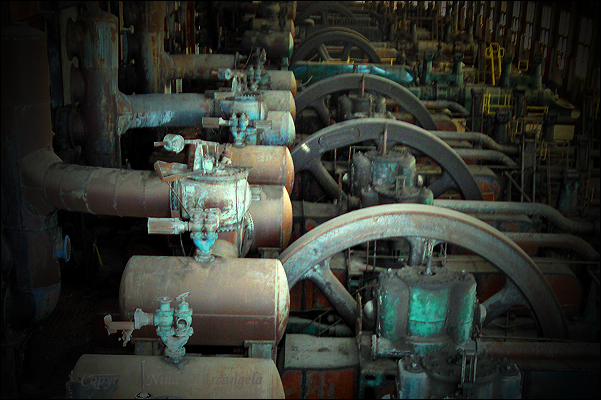
Firm structure to fine dust—machines turn in unending drudge. Bleach powder, chalky, light, stirs endless with their rusted labor. Ill fated are the powers which motivate the process; knowing soon they’d become its product. Weakness feeds the goods produced, monsters purchase its favor. With delicate pouf, makeup, attire; they parade around with gratuitous chortles. Their faces worn in layers of death, they grin ever wide with flavor. For a bit of coin, their color reborn, pale as frosted glass. Those suffered the gift of an end, worth only a minute of reception, would be stripped of flesh and ground to pleasure each patron.


Every Last Damnèd Soul
Scarlett R. Algee

It’s a tricky business, distilling souls. Always have to boil the bitterness off first; it gunks up the works if you don’t, and it’s a bitch to clean out, pardon my saying. Take this lot—they’ve been stewing for three days just to get the residual resentment out. Drowners, all of them. We leave the salt water in, though; customers say it adds a little something to the finished product.

Some of the souls scream while they’re rendered. Some of them sing. I’m told it’s quite enticing. I’ve mostly learned to ignore it, myself.

Madam. Madam. What are you doing out here on the floor? No, you may not touch the machines. The experience would be damnably unpleasant for both of us, pardon my saying.

Madam, please—what’s that? Your son? You think you hear your son? You have my condolences, but that’s quite unlikely. They aren’t really identifiable now, so for your safety I must insist—madam! Madam!

Oh…not again.

Patterson? Yes, idiot, of course we stop the process! We need an extraction here! She’s the third one this month!

But save the blood. Every drop. The customers say it gives a certain ambiance. Besides, she sings prettily already, doesn’t she?


Rust
Charles Gramlich

He fled. And the wicked followed. Their boots banged like gunshots as they chased him through the abandoned factory where he’d sought refuge. Down empty corridors, they went, through shattered doors. He knew this world and lost them in a room of silent turbines. The search moved on.

The hunters hooted through the vast spaces, first in glee, then frustration. The sounds faded, but the hunters were cunning. He stepped from his hiding place only to meet a brutal blow to the back. Tricked, he went down in terror, and rolled over to find himself encircled by humans. Snarling, they hefted steel bars torn from the factory’s rusted machines.

He threw up an arm; they hammered through that defense, smashing his limbs, crushing his abdomen, sending pieces of him clanging across the floor. Within moments his body lay in a heap of torn alloy. One eye sparked and sputtered. But with his other eye and the last of his consciousness he watched as they set him afire. His vision bloomed, then blackened. A human curse was the last thing he heard.

“Robot slag! Now let’s get the rest of ‘em.”


The Machine
Mark Steinwachs

I cough as my gnarled hands run over the tarnished machine. “It’s amazing how many people don’t believe it happened. Proof that humans are fools. Wirths, Mengele, Clauberg; they would have been nothing without me. Mere footnotes.” I lead him amongst the tanks, my fingers gently caressing them. I shuffle along as best I can, years of dust getting caught in the sun coming through the windows. The tiny particles remind of …“I killed millions. Let that sink in. Millions. And here I am. I live my life hidden in plain sight, just like her.” I kiss the tank gently. “Now it’s your turn. Go back and make your country great again, and then the world. Go, my lieb enkel, my dear grandson. Finish what I started.”

“I promise,” he whispers and kisses my forehead then walks away from me.

I lay down on the cold floor. The screams of decades ago flood back. Smiling, I close my eyes for the last time. I only wish I would get to hear that sweet anguish again.


Once
Mercedes M. Yardley

He was hungry. He was always hungry, always starving, always ravenous. His face was far too sharp and his cheekbones cut against his skin in the most visceral of ways. Once he had a name and even people who called him by it, and food was a bit easier to come by. Never quite enough, surely, but not too little.

He slept in the abandoned factory, catching rats and spiders when he could. It didn’t matter if they were malformed by radiation, because so was he. He stuffed them in his mouth, piece by piece, bit by bit. If he just held on, if he just stayed alive, all of this would make sense one day. He had to believe it.


Yes, Father
Lydia Prime

After closing the door, the towheaded child turned, “Father, I’ve returned the chalice. Is there anything else you need?”

“No son. Thank you for your service today.”

As the boy turned to go, he hesitated, turned back, “Father, one of the other boys mentioned a puddle in the basement, I thought I should tell you.”

Glancing at the boy, the Father headed toward the door leading down the stairs. “Where is this puddle?” he asked, hands clasped.

“Just to the left, Father, down the hall.” The boy looked shamed, almost embarrassed as though he’d heard the rumors. Could this one be asking? It seemed unlikely, but he couldn’t help himself, he ran his tongue ever so slightly across his lips.

“The generator room?”

“Yes, Father. The generator room,” the flaccid faced boy stood still and expectant.

“After you, my child.” The youth led him into the room, the light dim as always. Confusion took hold of the robed man, there were others there…waiting. The row of young boys tensed with anticipation. “What’s going on here? Did you all find the puddle?” A nervous chuckle.

“No father, we’ve found redemption. The shame isn’t ours.” As each youth smiled, the glint of their sharpened teeth told of a different indiscretion.


Feed the Machine
Nina D’Arcangela

Bones crush; the mechanism churns, always turns. Spinning, crunching, consuming. The snap of a skull; shrapnel slices the air nicking tympanic membrane. Those that man the machine have no hearing, they are born without; the ear a remnant from long ago. Chattle of the cause, a war not ours, we breed only to feed the machine.


Each piece of fiction is the copyright of its respective author and may not be reproduced without prior consent. © Copyright 2019

Reunion

A small shack in the Ozark Mountains. Through the pines that noose it, a hard wind rushes like frantic horses. It isn’t wind that wakes David Holcomb from a long sleep. A car door slams outside. David slips from bed, hugs himself against the chill air. Candles gutter; the fireplace gleams with coals, but not with warmth.

David peers out a window through dusty glass. The moon hangs like a melted Christmas ornament in the nylon shine of night. No clouds mar the star-seeded sky. A parked station wagon is visible. A shadow strides to the cabin’s front porch.

Hesitantly, David steps onto the porch. Wind plucks at him; the chill needles. The figure’s back is toward him. “Who are you?” David calls loudly. “What do you want?”

The figure turns; a coat with a hood hides the face. “We need to get inside,” a voice says. “It’s coming.”

The voice is female. It can’t be who it sounds like.

“What’s coming?” David asks.

The woman doesn’t answer but walks past him into the cabin. David looks off into the woods for a moment. Blowing leaves kite past. The air whips in circles. Trees bend before it while twigs and dead pine needles rake the cabin. Dragons could be crashing through this wind-torn forest and no one would know.

David hurries into the cabin himself, makes sure the wooden door-bar is engaged. The woman stands by the fireplace. She’s thrown back her hood. She’s young, maybe twenty—a couple years younger than he.

“No,” David says. “No!”

“Yes, David.”

David shakes his head violently. “I’m dreaming. I have to be. You can’t be here.”

“Why?”

“Because you’re dead, Shannon. Dead.”

Shannon smiles, shakes her head so that her short red hair gleams in the candlelight. “Don’t I look alive to you, David?”

“I know you’re dead.”

“Despite your own eyes? How do you know?”

“I killed you, Shannon. Ten years ago. The last time we were in this cabin. I killed you and buried you outside in the forest. Buried you deep.”

Shannon laughs. Her eyes twinkle. “Buried me deep? In the woods where the roots grow thick? What did you use to dig that hole? A bulldozer?”

“A shovel.”

Again, Shannon shakes her head. “It would take a year to dig deep with a shovel in that soil.”

“I dug it,” David says.

But Shannon isn’t listening. Not to him. She is looking outside, to the woods. “You hear it?” she asks. Her voice drops to a whisper. “It’s getting close.”

Terror stitches itself up David’s back. “What? What’s getting close?”

“You know.”

“No. I don’t.”

“The Darkling.”

“What’s that?”

“You know. You’ve always known.”

David glances nervously at the locked door—as if it will birth a monster at any moment. He looks back at Shannon. She has…altered. Her face is younger, thinner. She’s grown small and suddenly looks as she might have looked a decade before—like a sickly ten-year-old. Her hair is knotted. Her nose drips.

But she steps forward; her focus is all on David now. “It’s time,” she says in a child’s voice.

David backs away. “Time for what?”

“To put away your sins. To move on.”

He shakes his head. “I can’t!”

“You have to. Or the Darkling will make us pay.”

“Tell me what it is! This Darkling!”

“David….” Then another whisper: “It’s here.”

David spins toward the door. Something is on the porch. It isn’t the wind. David whimpers, then sidles toward the fireplace. Planks creak on the porch as some heavy body treads them. A black ribbon of shadow flickers beneath the crack at the bottom of the door. Through the crack bleeds a smell like mint and kerosene.

David feels near to death as the door-bar bulges inward. He grabs a poker from the fireplace, brandishes it like an axe. “What is it? What is it?” he shouts at Shannon.

“The past,” Shannon says. She drops to her knees.

“Tell me!” David screams.

He raises the poker, as if he will strike Shannon. His arm trembles. But he remembers. That’s not how it happened—ten years ago—when Shannon begged her older brother to kill her. He drops the poker. A forgotten brown paper bag rests on the fireplace mantel. David reaches in, draws out a nickel-plated revolver.

As David turns with the gun, not sure what he will do, Shannon says: “The future.”

That word! David cries out. His eyes flood with tears. He falls to his own knees. The pistol is huge in hands that are suddenly young, small, weak.

“I’m sorry, Shannon,” David says. “I should have been able to stop it sooner.”

Shannon doesn’t hear him. “The now!” she shouts.

The door-bar cracks wide. Splinters sleet the room. The door smashes open. The Darkling comes through.

David suddenly sees the shack as it is. The bed where he slept is rotted. No glass fills the windows. No embers flare in the barren fireplace. A boy and girl kneel on the trash-strewn floor. Twelve, and ten, and ephemeral. They recognize the form that slides into the room like an acid mist.

David makes a different decision than he did ten years before. He empties the gun into the mist. The bullets do no good.

A chuckle echoes off the walls.

“There you are,” their father says. “My loving children.”

He kicks the door closed behind him.

∼ Charles Gramlich

© Copyright Charles Gramlich. All Rights Reserved.