This Broken Love Story

She loves him in pieces, in separate parts.  A sliver of this, a morsel of that.  He is tasty and delicious and she savors him bit by bit by bit.  There could always be enough to go around, maybe.  If she is careful.  If she only sups a little at a time, just enough to whet her taste.  If she keeps her hunger sharp enough to appreciate, but never to devour whole.  She keeps a spare collarbone in her back pocket.  She warms her hands on it, nibbles it delicately with sharp teeth.  When the desire becomes too strong, she puts it away again.  Anything else would be untoward.  Anything else would be far too terrifying.

He doesn’t nibble, or take dainty sips, or deny himself.  Anything.  He takes mouthfuls of bone, of meat, of soul.  When you’re starving, it’s difficult to hold back. When the gas tank or stomach or heart is empty, nipping away at a brandy snifter is ineffectual.  Better to gulp great big lungfuls before it’s gone.  Take the loss. Take the teasing.  Take it before it’s rescinded, or before he grows tired of the game, or before they both wake up and realize that this isn’t reality.

“It isn’t ideal,” she murmurs, mouthing the underside of his jaw. Just enough for a taste. Just enough to keep the bloodlust at bay.

“It isn’t ideal,” he agrees, and when he pulls away, she’s missing her right shoulder, most of her ribs.

This story is broken, and they both know it. But it is their story.  It is still a story of love.

∼ Mercedes M. Yardley

© Copyright Mercedes M. Yardley. All Rights Reserved.


Damned Words 43

Skeleton_Grin_resized

Fate
Nina D’Arcangela

Jabba-jaw, raking claw, with haste to the frenzy you did make.
The fray engaged, you are quick to slay any beast brought to slaughter.
Fierce clashing, teeth snapping, bones split beneath hammering rage.
Yet fleet of feet, it has you beat, as it fells your carcass to ground.
The battle fought, fury spent naught; your grin the jester’s call.
With placid lips and eager sips, it sups where you did fall.


The Bones of Her Earth
Charles Gramlich

Her name at ten was Melody. She lived amid the avocado green woods on Millstone Mountain in Arkansas, near a town called Liberty. Melody had hair like a thicket of weeds and eyes no one ever looked into. She had thoughts no one offered a copper penny for, and all her words she kept in her mouth so they couldn’t be slapped away by Mama.

Her name at twelve was Holly, after the necklace and wristlets of red berries she always wore. Most days, she spent in the woods, eating hickory nuts and wild cherries in season, eating other things no one ever thought to name. She caught tadpoles and carried them in her pockets until they dried hard and dark as rabbit turds. Then she buried them and made wishes over their graves. The wishes never came true.

At fourteen, her name was Harmony. She’d learned to sing the pain of her bruises through the heat of the summer like the cicadas. She would lie in the creek and place flat stones on her belly. The smooth weight comforted her scars. Sometimes she slept out under a roof of cedars and stars and dreamt of flying through the trees like dragonflies. She always awoke before she grew wings.

At sixteen, she threw away her names. That was the year she found the jawbones, white on the ground amid frost-killed leaves. She prayed to them as Gods. They answered. Carrying them in her fists, she returned to the house she’d never called home. The bones were no longer white when she was finished with Mama.


Wednesday
Marge Simon

Today is Wednesday, the day the Beast people come for the dying. The grown-up’s call them ghouls. Once, the Beast people lived deep in the earth and ate dead bodies. But now they came up to stay here. They wear long, hooded cloaks and their breaths rattle as they move. It’s like the sound his father made when he was so sick. Papa coughed all night, even in his sleep. On a Wednesday, the Beast people came and took his father away. Now Mama is very sick too.

When the sun passes to afternoon, he is worried about her. If he stays in the house, they’ll come in. They’ll hide in the shadows and wait for Mama to die. That’s what they did when his father got so sick. He’s sure they want her too. Two miles up the road is the cemetery. He decides he will lure them away from Mama.

When he sees them coming, he goes outside and runs as fast as he can all the way to the cemetery. He is out of breath, but first he walks around, searching the gravestones. One of them has to be his Papa’s, but he can’t remember where it is. He’d come with Mama to put flowers on it last week, but there are no graves with flowers and he can’t read. Exhausted, he sinks to the ground, bumping into a peculiar shape. The headstone creaks, the ground gives way and he falls in. When his eyes adjust to the dim light, he sees the cavern is filled with long skulls and old bones. The skulls have the Beast people’s faces.

Above, he hears the rattle of their breathing coming closer. This must be their secret burial place. There’s nowhere to hide. He starts to cry.


In the Forest
A.F. Stewart

Shall I tell you a story, little one?

No, no, wait, don’t back away. Stay here, with me, and listen. I’m sure you will find it fascinating. My tale is about this forest, you see.

They say this woodland is haunted, don’t they? Well, they’re correct. Spirits move past the trees, within the wind, and worse, the ravenous dead walk here, among the bones.

Can’t you hear their murmuring voices growing closer?

They’re hungry. Always hungry.

I think you understand now, why the villagers told you not to come, not to hunt here. This forest kills everything that enters, and nothing ever leaves.

They’re here now. Can you see them, those pitiful skeletons, gnashing their jaws? You can run if you like, but you’ll be dead soon whatever you do. The forest takes us all.

We all remain.

Until we are nothing but bones.

And cursed souls.


New Friend
Lydia Prime

As little Melanie burst through the back door, curtains flew and the screen-door slammed shut. Mommy yelled for her to stop, but she was going so fast in her slippery shoes that she skidded halfway across the room. She could see her mother eyeing the mud on her new lace dress. With hands on hips, and a scowl on her face, Mommy’s pinched lips said everything her mouth didn’t need to.

Melanie started to protest before Mommy could speak, but one quick snap of the towel she always wore over her shoulder was enough to silence the child. As mother’s hand reached out for what Melanie was hiding behind her back, a pot lid rattled on the stove. Mommy turned thinking it was boiling over, but it wasn’t. Melanie took a step backwards.

Focused on her daughter once again, mother reached out and gestured, but Melanie didn’t want to hand over her prize, it had told her not to.

As Mommy took a step forward, she heard something rattle in the ‘fridge. Melanie was slowly sliding backwards into the hallway as she watched her mother open the icebox. The eggs were tipped and fell to the floor with a smash! Mommy bent down to clean the mess, and when she did, the large, glass milk bottle began to jiggle.

Melanie quickly turned and brought her new friend up to her face, panic flashed in her eyes. The chuckle that ran through her sent a shiver down her spine.

Watch, the voice slithered through her mind.

Melanie turned as the heavy jug crashed into Mommy’s skull and split it in two. Now put me in the puddle to feed, the bones intoned. With little choice, Melanie did as she was told. She was, after all, a good girl.


Mask
RJ Meldrum

Cody heard the truck. Pop was back from hunting. He parked in front of the house. Pop had been successful. A buck. Pop climbed down.

“I want this dressed. Skull needs to be bleached, I want it in my trophy room.”

That was where he kept his skulls and stuffed heads.

“I was gonna go swimming.”

His father’s face went dark. He grabbed the scruff of Cody’s shirt.

“I didn’t raise no pansy, I raised a man, one who can see to his own meat.”

“Yes, pa.”

“Now, get working, while I grab a beer.”

Cody went to the back of the truck to see a bloodstained deer on the truck bed. He got to work.

It took hours. His hatred for his father grew. Every day he was forced to ‘man up’. Forced to play sports he hated, crushed by boys twice his size. Forced to shoot helpless animals. Forced to cut them open, cleave their flesh, rip out their bones for display. He hated it all and he hated his father.

He stared down at the skull, boiling in the huge pot on the outside gas burner. After a couple of hours, he removed it from the water and scraped all the meat off. Cody stared down at the eye sockets. What had this creature felt, just before it died?

He knew what he had to do. He had to avenge the deaths of all the slaughtered creatures. He had to avenge himself.

Later, after sunset, he stood on the threshold of his father’s bedroom. Cody had split the skull in half and reattached the two parts with leather straps. He was wearing it, his face obscured. He was no longer Cody, he was nature. He held Pop’s favorite hunting knife.

The moon emerged. It was time.


What Remains
Mercedes M. Yardley

“Hey. Hey. Marissa.”

She ignored it, ignored the way that it chattered and teased and always called her by the wrong name. She walked past it resolutely, a discarded piece of bone nipping at her heels as she strode by.

“Hey. Melanie. Just pick me up. Take me home. Let’s play together. There are so many different ways to play together.” The animal skull grinned at her. Funny how skulls are always forced to grin. She didn’t believe being dead was as much fun as the living were led to believe.

She pulled her laundry from the line and spun around quickly, avoiding the snapping of the skull’s jaws as it lurched at her feet. She hopped over it and headed home.

“Wait. Wait,” it called after her, and she closed her eyes as she heard it whimper and snarl. It buried itself under the leaves and debris, crafting a safe little home for itself until she passed by again in the morning.


Offering
Mark Steinwachs

The streak of sunlight across the bone makes the situation seem worse. The gods illuminating what I could plainly see. Not a scrap left. I crouch down and take the lower jaw, turning it over, hoping there would be some bit of flesh. Clean. My fingers trace the scratches left in the bone. I shudder and set it down. I lift the upper jaw, not wanting to turn it over. Like the piece before, its clean. The teeth marks in this one etched deeper in bone, its hunger not satiated. I stop myself before throwing the bone across the forest. What good would that do? I did the best I could, and my offering wasn’t good enough. I stand up, remove my shirt, and draw my knife. I slowly run the sharpened blade across my chest, blood oozing.

No animal makes a sound. The wind rustling dried leaves stills. I join nature in stillness, my last moments. Silence. A sharp, hissing breath from behind me followed by searing pain. My last vision is its unholy darkness and razor, white teeth.


Apotheosis
Scarlett R. Algee

Find me, the bones had whispered. Find me. Feed me. Let me protect you.

I’d discovered them by accident last night as I’d crunched through the snow blanketing my backyard: the two damaged halves of a jaw, lying in a cocoon of dead leaves atop the powder. What they were, I didn’t know, except that they were too white and too gleaming: scraped clean.

And that they were exactly what I needed.

Now I lay them, still reverently cradled in my gloves, on my laboratory table, apart from all the other pieces I’ve gathered in the past year. Ribs. Vertebrae. Limbs. Teeth. All of them had whispered to me, little indistinct murmurs, little urges of wanting to be again. None had spoken clear words until I’d found the jaws last night.

Find me. Feed me.

Some sort of intelligence resting in the bones. I shake out the rest of my tools: hammer and chisel and screws, lengths of wire and leather thongs. Enough to bind these shards into something whole, because the urge to be is strong.

Listen, the bleached jaws whisper, and I bend my ear to their words and begin to work. First the bones, then skin, then blood.

Listen, I hear again, and I know that whatever I’m creating this night, it will be enough.


Unburied
Lee Andrew Forman

Soaked in crimson, its feasts had been legendary. Limb from body, head from torso, sinew and organs consumed; yet its appetite never fully sated. Memories that live deep within the remains of a banished soul. Unwritten from scripture, cast from history, forgotten by time; these bare, arid bones wait for the caress of the unsuspecting. A taste of copper-tang that will bring about its awakening.


Each piece of fiction is the copyright of its respective author and may not be reproduced without prior consent. © Copyright 2020
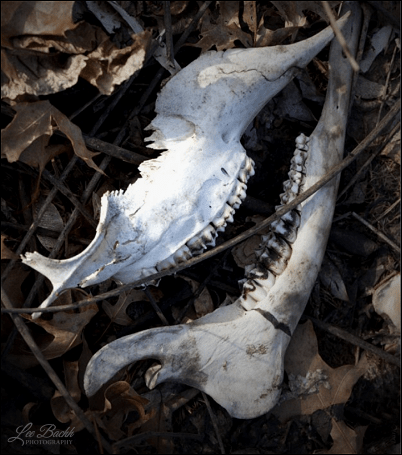
Image © Copyright Lee Bachh Photography
Red Book

Only moonlight lit the old barn. But I could see. My eyes were sharp as a wolf’s. Every crack in the walls bled electric blue. The night had texture; it had intensity. It smelled sour. It smelled like rust.

Why was I here?

The bottom floor of the barn was empty: no hay covering the dirt, no troughs for pigs or stalls for horses. It was quiet ground, waiting, gestating. A ladder to the loft stood to one side. I climbed, stepped off onto a board floor that creaked under my boots.

What had drawn me here?

The smell changed, grew wet, like paint. The light held a black shine. Two wooden sawhorses rested near the wall with a plank lying across them. A row of small clay vessels stood upon the plank; a set of artist’s paintbrushes waited in one.

Waited for what?

I stuck a finger in one of the clay pots, as if into the smooth, rounded interior of a skull. The bottom was coated with a residue, both sticky and gritty at the same time. I lifted my hand, sniffed the finger. I couldn’t quite identify the scent or the feel.

The light dimmed as a cloud swallowed the moon. I’d come prepared. Taking a votive candle from my pocket, I lit it and held it up. The glow was too bright, like tacks stabbing into my eyes. I pushed the candle out to arm’s length—and saw writing on the wall.

Wild words, sentence fragments, snatches of poetry. Some phrases scrawled; some ran as straight as razors. They extended to my left and right, reached from the top of the wall to the floor. The individual letters were baroque, almost runic, written in crimson-black and adorned with loops and swirls.

Had I been led here to read this message?

Was it meant for me?

With the candle as guide, I edged my way to the beginning. The message began at the top of the wall on the far left. It read:

“I dream in heat, on cracked roads whose fissures you would have smoothed before me. I dream the river where dirty flesh is laundered, where saints wallow in the bile of love, where the flow is dark with the froth from wounds. I am the mire into which the froth flows; I am bittersoul turned amber in the trees. Why hast thou forsaken me? How may I turn your ear once more my way?”

There was more, densely more. It sang, writhed, shrieked, tore, bruised, begged, licked. I followed it line by line by line. The ink with which it was written grew thinner, as if the scribe were running out and striving to make it last to the finish. But when I came to the end, there was no finish. The words just stopped.

“Enslaved to aff…”

Enslaved to what? Affection? Affirmation? Affliction?

Snarling, I kicked the wall. Dust tumbled into the air, danced in the candlelight with Brownian motion. There was meaning here. Such meaning. But who was it for? Why wasn’t it finished?

Whispering!

I turned to look. Dots of black whirled curlicues in the air. Flies.Their wings buzzed. There weren’t many of them. Then I saw the bodies—three—six—nine. They were pale as wax in the candlelight, except for the ruby necklaces that each wore. I understood. Their pallor was partly a coating of lye to keep away the flies and the smell. The necklaces were not made of gems.

I looked back at the wall, knew suddenly what ink this unfinished manuscript had been written in. Three—six—nine….

Three more bodies would provide enough blood to finish this red book.

I knew why I was here.

∼ Charles Gramlich

© Copyright Charles Gramlich. All Rights Reserved.

Robert Browning and the Spider Poet

Poet Robert Browning was known to keep a pet spider in a skull on his desk. Perhaps it gave him inspiration, or perhaps he just liked the idea …

My mistress needs neither sun nor moon for her creative moments. Drawing shut the brocade curtains of her boudoir, she pens her poems by candlelight. Flickering shadows form a web around her lovely silhouette. Certainly Master Browning himself would enjoy her inspirations — but even more, the sight of her.

Her midnight curls are drawn to fine designs with clip and braid. With those bright black eyes and liquid voice, she was made to confound men, and I was one.

I procured the finest black net stockings from Hong Kong and watched closely as she drew them on her luscious legs. But one night, she removed those nylons, used them to bind my arms with complicated knots, humming “Love Me Tender”.  Thus mesmerized, I was all willing for her games,

Yes, I was so confident, so sure of my manhood. I imagined the smell of my sweat on her skin, the joy of our union. Our sighs of satiation, perhaps a smothered giggle. But that idea was scaled down some, since her perfect legs had multiplied, and mine had not.

And now she keeps me as a pet, inside a human skull upon her desk. It’s much like Robert Browning’s own. Sometimes she strokes my shiny head with long dark fingers, admiring my diminutive condition.

Her poems often mention spiders as did Browning’s years ago. Unobtrusive as the deadly recluse, lethal as a spider’s potent kiss.

∼ Marge Simon

Telling Stories

I’ve started dreading bedtime.

It’s Emily. Oh, it’s not her fault, for God’s sake, she’s only three, but lately every time I come to tuck her in she’s dragged out that book, and always with the same demand.

Story time.

I don’t know where she found it. I certainly didn’t buy it, and it wasn’t in the house when we moved in. Trying to ask the neighbors about it has only gotten me evil looks and muttered curses and a lot of disinvitations, and I can’t say I blame them—the damned thing just looks so odd, bound in patchwork leather with some kind of crude embroidery that I guess is meant to look like stitches. And the pictures are awful: all fangs and teeth and multiplicities of limbs, sometimes blurry and seeming to slide off the page, sometimes so detailed I wake up screaming.

But Emily always sleeps soundly, and I can never find the same picture twice.

The words, though. The words are worst. Some of the text is black and some is red, like an old Bible, but none of it is in English. I’m not even sure the words are actually words. They’re crooked, wriggling shapes, shifting and writhing on the page; the first time Emily asked me to read something, I decided to play along, make something up as I went, but the shapes turned to words as I struggled over them. Not in front of my eyes, but out of my mouth. English words. Suddenly I was telling my daughter monstrous stories, stories of slaughter and gore, of dead gods rising from the sea, rising to blot out the sun.

And Emily laughed and laughed.

I said the words were worst. No. That’s not true. The changes are worst. Tuesday morning when I mowed the yard, the grass twisted and bled. That night I walked out onto the porch for a smoke and the moon looked down at me, huge and red, pockmarked with yellow eyes. Last night while I was reading, something slammed into the bedroom window, something far too large to be any kind of bird, and Emily clapped and laughed while I shrieked.

This morning there was nothing on the window but a scorch mark that stretched down the wall.

I’ve tried throwing the book away. Tried giving it to the library. Every time, it was back on Emily’s bedroom shelf that night, and now the disapproving note I got from the librarian is a soot-edged bookmark.

And Emily knows something’s happening. She knows, and she’s changing too. Sometimes I catch her watching me like she’s sizing me up, waiting; sometimes her eyes seem a little yellow, and her mouth full of too many teeth.

I should burn the book. Tear out the pages. But it makes her so happy, I can never quite bring myself to tell her no when she says, Story time.

Still, just once, I wish she’d ask for Where the Wild Things Are.

~ Scarlett R. Algee

© Copyright Scarlett R. Algee. All Rights Reserved.
Where the Wild Things Are © copyright Maurice Sendak, 1963


Shadows

The blast stripped his skin away, charring the flesh underneath and turning his bones to dust. His eyelids were sealed by the heat, the fluid orbs boiling and bursting in their sockets. He felt a brief moment of pain, then nothing, as his limbs were ripped from his body, his guts torn open and his head shattered. After the explosion, there was nothing left except for a few misshapen lumps of gristle and burnt meat.

He woke. He was in the boiler room as usual. He stood, dusting himself down. He quickly realised the room had changed. There was a hole in the roof and the room was full of smoke and debris. The furnace was ripped open, sheared metal hanging from the frame. He looked down and saw the charred, rendered remains of his body. He remembered the explosion. He was dead.

He’d often thought about death, not morbidly, but in a detached way. What did it feel like, what did you see, experience? Now he could find out.

There were sirens in the distance, but they didn’t concern him. He was well past the point of being saved. No defibrillator was going to bring him back; they’d have to take his body out in a bucket.

He walked upstairs to the factory floor, amused to see the panic and fear on his colleagues’ faces. They had practised drills for this type of occurrence, but none of them seemed to remember. They ran for the doors in a panicked mob. No-one was checking for colleagues, no-one was counting heads, no-one was grabbing fire extinguishers. He laughed to see them, but reflected he would probably be doing the same. He wondered how long it would be before his absence was noticed, who would discover him, the memory of the sight no doubt being burned into their memory forever.

He walked out the factory, intrigued to find he wasn’t floating or drifting. His body felt as solid as always. Nobody noticed him, so it was clear he was invisible. He walked towards a stack of pallets with the intention of seeing if he could walk through objects. The bump on his nose suggested he couldn’t.

He wandered away from the site, keen to get home. He had a sense that his time was limited, and he wanted to see his family for the last time. He wanted to say goodbye.

His car wasn’t an option, so he decided to walk.

The factory was situated in the working-class part of town. It was a Victorian red-brick edifice, originally a flour mill, but converted into a small timber yard in the late 1970s. He walked down streets full of red brick terraced houses, originally built to house the flour mill workers and their families. The homes were modest, two-up and two-down, with a front door that opened straight onto the street and a small yard behind. An alleyway at the back allowed access to the yards.

As he walked down the quiet street he became aware of curtains being twitched in almost every house. Was he visible? Could they see his injuries? It didn’t take him long to realise he was being watched by the dead. Pale faces with sunken black eyes started at him from behind glass. These were the dead of past ages, condemned to the house where they died, condemned to move unseen amongst the living. He saw the sadness in their faces, the despair.

As he walked, getting closer to his home and family with every step, the world around him changed. The real world, the one he had occupied until twenty minutes ago, was starting to change, starting to become unfocused and misty. The figures in the houses were becoming more distinct, more solid, while the bricks and mortar became more and more transparent. His feet started to sink into the tarmac of the pavement. The world darkened. The street, the one that belonged to the real world, faded away. He realised the houses, the pavement, the entire mortal realm had passed from his view.

He found himself on a wide open plain, full of darkness and shadows. The dead were all around him.  Most were heading to an unseen point in the distance, some were simply wandering around, lost. He joined the throng, walking to the unknown destination.

An endless time later, travelling through this dark, shadowed land, he arrived at his destination. Standing there, with countless others, he looked across the river into the darkness. Boats arrived on the bank every few minutes, the dead boarded and the boats headed back out into the darkness. Some of his new companions shuffled around, unsure, but he knew he had to make a decision. To go across the river meant the end. He wouldn’t see his family again.  To stay on this side was to become a wraith, a spirit that haunted the mortal world, being able to see but not being seen. The sadness was overwhelming.

He stood on the river bank and made his decision. He remembered the misery and despair on the faces staring out at him from the houses in the street. He didn’t want to suffer that fate. Instead, he would move on. He stepped onto the next boat.

∼ RJ Meldrum

© Copyright RJ Meldrum. All Rights Reserved.


Breathless

His wide eyes shadow my every move, veins throb in his neck. A look I’ve seen numerous times. Lying stomach-down, each limb bound to the table I bolted in place. He shakes, sweat plastering cropped hair to his skull. The acrid smell of urine and sweat fills my soundproofed basement. An odor I’ve learned to ignore. Can he? I’ve never asked them, not even the ones who lasted a while.

He struggled at first, like they all do, but the bonds are too tight. Any background noise will ruin what I need. The ball gag is slick with saliva but muffles the sounds. Situations like this remind me that humans are animals—base, instinctual creatures. We’ve grown arrogant because we have thumbs and big brains.

He started with questions. Like a dentist talking to a patient, I understood every word—and ignored him. Then he begged, pleaded. Cried. Screamed.

They’re all the same. Except for one thing. Everyone’s sound is unique. Pitch and timbre, guttural groan and rasping breath, final gasp and last exhalation.

I caress his salty hair. His body slouches. “Almost over,” I say. “I’m going to make you famous. Promise. I know talent when I hear it.”

With two more steps, I’m hunched over my laptop. It’s a simple workstation, but it does the job. A few keystrokes later, and I’m ready. I hit the record button. My thumb taps the mic mounted to the short boom base and levels jump to yellow. I set it on the ground, tilt the mic toward his face. I unstrap the ball gag and pull it free. A strand of spittle connects his lips to the ball in my fist, then falls. The carpeted floor darkens under each drop.

He chokes. Levels jump on my screen. They touch red. There will be some distortion, but I’m fine with that.

“Please.” It’s between a whisper and a rasp, his throat long ago rubbed raw. “Please.”  He’s said it countless times, at first a plea for freedom. Now that he’s accepted his fate, this solitary word is still a plea for freedom—just a different kind.

I glance at the mic. Still in position. I climb onto the table, planting one knee on either side of his rib cage. His shortened breaths register on the screen, levels in the yellow, dropping closer to green where they need to be.

I’ve taken almost everything I can from him These final moments are ones I can never go back and capture again. I let out a long breath. I wrap my hands around his neck. My fingers search, finding their targets. My muscles tense, all my attention on the screen. My grip tightens, squeezing. Little bursts of color in the levels mirror the sounds under me. My languid breaths contradict the staccato rhythm of his gasps. My body stills, except my fingers.

A meter on the screen measures time. Approaching one minute. Not long now. I hold my breath as he lets out his last exhalation.

Perfect.

I slide to the floor and return to the computer. I press the space bar to stop recording. I transfer the file to my flash drive. A smile twists my lips as I head upstairs, drive in hand.

In my studio, I make quick work of loading the files, manipulating them so they’re ready for use. I swivel and face my keyboard. Pressing the key, his last breath spills from the speakers. I hold the note, bending the pitch up then down, layering it into the nearly finished song.

Almost there. A few more tries and I have it.

To my left, three phonograph statues proclaim “Best New Age Album.”

This will give me number four.

∼ Mark Steinwachs

© Copyright Mark Steinwachs. All Rights Reserved.


Mental Anesthetic

Smoke swirling overhead, I lay on the cool filth covered ground, ashing in front of my face. A particularly crisp piece of dried wallpaper lights from the dropping embers. The night is nearing, the shadows cast upon the walls aren’t dancing nearly as much; I won’t be alone when the sun drops beneath the horizon. They are coming, as they always do.

I flick the butt of my cigarette and allow more pieces of detritus to smolder and pull my limbs in tighter to a fetal position. It’s easier this way, to just rest on the ground and wait rather than try with futility to hide; the past few weeks have taught me that.

The wind howls as thin branches scrape against the weakened glass, I shiver and light up another. Within minutes, the cherry of my cigarette is the only light left. A door opens a few floors below and hurried footsteps rush the stairs. I count each foot fall, there are more this time. Facing the wall and finishing my nicotine delight, the door behind me slowly slides open. My heart doesn’t quicken; the nerves I used to feel have all but been replaced by a mental anesthetic.

“Miss us?” One of the creatures questions; I don’t reply.

“Of course he did,” says the other, tapping my shoulder with its toe. My body rocks back and forth as they get into position.

I close my eyes as their teeth sink beneath the surface of my flesh. They lap from my open wounds, savoring the taste of a metallic iron liquid. The grotesque slurping and gargles wrap my stomach in knots but I know better than to fight back.

“What a shame, looks like this one’s tamed.” I hear, my head becoming fuzzy.

“Perhaps another? His daughter?” They’re taunting me, covered in my blood and snickering. My pulse quickens, not from fear but anger. “Definitely his daughter, his adrenaline is starting to rev.” These wicked beasts cackle and I stay silent, nothing I do will help me now.

“D-D-Daddy? I’m scared.” A faint cry from the hallway. It’s her.

“There we go!” Blood pressure springing through the roof, my lesions gushing while the freaks continue their feast.

I try to get up, to fight them off, but all I can do is mumble, “Youuu-bazztir…” As the silence and darkness consumes me.

∼ Lydia Prime

© Copyright Lydia Prime. All Rights Reserved.

Damned Words 42

DW_42

Awakening
R.J. Meldrum

The house had stood alone for years, shunned by the locals.  It was supposedly haunted, dangerous. They broke in, looking for something worth stealing. The first room was empty; the paint peeled away from damp walls, dust and cobwebs lay everywhere.

“There’s nothing here.”

“Let’s try another room.”

They opened the door to find a fully furnished drawing room. No dust or cobwebs. The furniture was polished.  A fire burned in the fireplace.

“What?”

They glanced back at the first room. It had transformed into a dining room, the table laden with sparkling crockery and glass.

“What’s happening?”

Piano music tinkled and they could hear the murmur of distant conversation. Above them, footsteps. Something was moving. After years of dormancy, the house had woken.


Forgotten
Nina D’Arcangela

Hell has laid claim to places on this earth, places that are lost, forgotten; for all intents and purposes, no longer exist. I woke in such a place.

For days I screamed for help, but none came. A failed attempt to reach the sill reminded me of shattered tibiae and why hope was a fool’s delight. Day would come, the glass above amplified the sun’s rays to the point of roasting me. My infected legs gleamed in the blinding light near filled with puss and putrefaction—they ached for the skin to crack, but no such salvation offered. An uttered prayer barely mumbled through cracked lips as ignored as the others; divinity’s attempt to further mock me.

I’m left to devour with eager greed what crawls my tomb; to lick dry the weep from the peeling walls. Now I wait. Death will find me, it’s the only thing my diseased mind is sure of.


Weeping
Lee Andrew Forman

The room immured my weak sack of flesh. I dreamed of limits in waking agony, a threshold which mortality cannot pass. But as my knees throbbed where blood of descent stained the floor, I knew this place existed outside the place it was in.

Ever-searching was that boy. He found something. My feet carried a slack frame—with grief holding both eyes blind—to places our kind weren’t meant to see.

Like father, like son. Like son, like father.

They say Jesus wept. And so did I.


Still Life With Window
Charles Gramlich

My life is lived between two walls of peeling paint. Nothing exists behind me except howling shadows. I do not turn my head to see them. There is enough howling within to hold my thoughts. When I’m tired, I lie upon the floor and let chips of fallen paint cradle my face. The chips are sweet when I nibble them. I must be half paint by now, and half flesh.

Of course, there is the window. I do not speak of that.

True food is rare, but I have enough. Ants and roaches and inchworms come across my walls and floor. Sometimes a bee or a butterfly appears mysteriously. Perhaps it arrives through the aperture that I do not discuss. I catch them with my blackened tongue; I crunch them between my teeth, which are mostly functional though they rattle in my jaws.

Once a bird came to me—flitting out of painful light into softest darkness. I caught it and held it for a long time before I fed. Over and over I shred those precious memories, of a warm thing, a thing that throbbed with heartbeats between my fingers.

And sometimes my memories reach further. Even though I fight them. They reach out through the white hole between my walls, out to where lives a beast called the sun. Today, I heard from that place, beneath that light, some wild, free language—a voice other than the one in my head.

It spoke of love, but I don’t know what that means


Charred
A.F. Stewart

The smell clung to the scorched room, buried in the blistered paint. I knew it well in my line of work.

The smell of death.

Three people died here a month ago, in a fire, trapped with no way out. A tragedy, the papers called it. The police called it an accident. I knew better.
Because I had an advantage over them.

But the reasons behind the fire weren’t why I was here, no my extracurricular abilities to commune with the dead led me here. I came to find restless spirits.

I was not disappointed.

I felt their presence the minute I entered the room. The echoes of terrified screams filled the space and their memories of pain lingered in the air, all bouncing off the blackened walls. The people who died here remained, caught in the agony of their last moments.

I smiled.

Every one of them deserved their manner of death. They deserved their pain. The fact they would live in that moment for eternity made me want to sing. I had jumped at the chance when offered the contract and rejoiced when I struck the match that sent them to this hell.

Sometimes I loved my job.


The Larder
Marge Simon

Just at twilight, the old woman hustled to the kitchen. It was time to prepare her son’s special meal, a duty she took particular pleasure in. The larder was cold and damp, even when stocked to capacity. It had once served as her son’s nursery, with Disney characters on the walls. Even the window had darling curtains to match. Of course, it no longer opened to let in fresh air and sunshine, which would likely cause dissention among the chattel. The panes were painted black and covered with solid iron bars. Some of the livestock were crawling around, searching for crumbs and mistaking them for strips of wallpaper. Deftly, she grasped one by the neck. Before he could bite her, she knocked it senseless with a rolling pin and dragged it down to the kitchen.

She settled in a chair to slowly massage the deep groove at the base of the skull. As she worked, she smiled, for this particular male looked a lot like the President. At last, the trembling eased and the head fell forward into her lap. It gave no sign of feeling the knife press deep into its jugular. The cut was neat, and she directed the gusher into her best brass pot.

Vlad appeared yawning. “Smells good, Mom. But I told you my cholesterol was over the top, remember? Just a salad for me tonight.”


Home
Mark Steinwachs

No one used the word abandoned, but that’s what happened. My life didn’t matter in their eyes. I wasn’t alone either. Many of us were left behind. And then our home, no it was a prison, was no longer used. We needed them to live. We fed off their fear, their hate, their worry, and so much more. Our numbers dwindled but some of us kept fighting, we believed we could make them return. Those few of us left grew up as those we were born of did the same somewhere out  in the world. Fight and belief are not enough though, and the last few began to perish. There was one thing the rest didn’t have that I did.

Hate.

I refused to disappear and it will all pay off today. I felt him coming to me. My hatred for him has kept me alive and more importantly kept the most tenuous bond between us. He could never be rid of me fully. Now he is here. Walking down the hallway, his memories flooding back. He knows where I am, drawn to me, but has no idea I exist. He opens the door staring into the broken, barren room. He is back, a full-grown man for me. I coalesce from the darkened corner, a perfect replica of him only in the form of shadowed smoke. He screams as I shoot forward, slamming into him.

This is my home and now it is time to repay those that left me here.


View From an Upstairs Window
Scarlett R. Algee

I can hear my parents downstairs; my mother chatters as dishes clink and pots rattle, my father’s muffled replies and heavy footsteps. I can’t smell what she’s cooking, haven’t smelled anything for days, but it doesn’t matter – there’s no food for me, not now.

I don’t remember anything between the bite and waking. Only opening my dry, stinging eyes and finding myself on a bed in this moldy room, this place that hasn’t been used in decades. My father apologized through the door. “We have to be patient.” he tells me. Either I die again, a proper death, or…something will have to be done.

It’s been a week inside these walls and that something hangs heavy in the air.

I haven’t slept since waking. I pace, circle, throw myself against the door that won’t budge; gouge at the cracked walls. I howl invectives in a voice I don’t recognize; snarl from a mouth that can no longer form words.

I’m getting hungry. That’s the worst part. After feeling nothing for days, the sensation of hunger has come roaring back. I can hear them moving around downstairs, they sound so soft, so delicious.

Going to the window, I lean my face against the glass, leaving smears of black saliva behind. My stomach cramps with need and I scrabble at the sill. Putting my head through the opening, the air is damp against my eyes, dewy inside my gaping mouth. It’s such a long way down, but I’m so hungry. I lean further out, steadying myself.

Either I’ll die a proper death, or something will have to be done.


The Manor of Krystiahn Koryci
Lydia Prime

The twisted branches from the tree outside remind me of just how long I’ve been waiting here. Waiting in an empty home, no one to comfort me, no one to care. But still, I stay, and I watch as the outside world moves on. The day gives way to night just as the seasons flutter by.

I can almost see the faded memories as I stand inside my forgotten room. A smile, a giggle, a hug to be cherished – but no longer felt. The faces have left my mind, however, figures from the past still taunt me.

In another time this room’s decor was perky enough to make me gag. Now that the mauve and flowered wallpaper has almost completely flaked away, I sort of miss the sight. The floorboards creak with each step I take, I’m not sure if my dusty bones creak louder. Closing the flimsy door behind me, I shuffle across the room to the uncurtained window. I watch the sky; the white fluff quickly spinning – warping into a gray warning of sorts. The storm is coming.

I watch the tree, its limbs stretch far and taught, forever reaching for nothing. Perhaps we have something in common. I lean against the wood pane and watch a truck drive up the hidden driveway to the front. A man steps out and smiles, staring up as if he can see me. His wife climbs out of the passenger’s side and joins him, he slinks an arm around her shoulders. She rubs her engorged belly and they grin, taking it all in.

How ridiculous, that these stupid people think they can take my house from me! They must be insane. I’ve been here for longer than I can remember, this is my house. With that final thought, the window shatters and I leave the decrepit room to learn about these trespassers.


Each piece of fiction is the copyright of its respective author and may not be reproduced without prior consent. © Copyright 2020
Image © Copyright Lee Andrew Forman

Sleep Tight

You wake beneath the glow of a urine-yellow nightlight shaped like a crescent moon. From the hall outside your bedroom comes a susurration of sound, a crippled shuffle, like rotted feet dragging themselves to bone on a sandpaper carpet.

Your heartbeat speeds. Sticky mouth dries. You sit up in vomit-clotted sheets. You’ve been sick, but you’re better now. Much, much better. Thanks to Momma.

But that sound. It’s almost midnight, the dregs of the day. Who is coming? Who is coming to your room in the hollow of the dark?

Something wet slaps against the old porcelain doorknob. It turns, scritches open on hinges that are more rust than iron. A bulk leans its head within, dressed in a pale wrapper of cloth under which odd shapes pulse and squirm. You’re reminded of a grubworm you once dug up in the garden—when there was still a garden. It’s just Momma.

A sigh possesses you as, from the doorway, your mother says, “Sorry I’m late tonight, Sweety. I fell asleep. Are you OK? Do you need anything?”

You’d begun to think she wasn’t coming this night. That maybe…. But you don’t complete that thought. It’s not a kind one and Momma does not like unkind thoughts. You only say, as mother’s clothes twitch and rustle, “I’m fine, Momma. Just fine. Thank you.”

She smiles. Her mouth is black because she’s forgotten her teeth again. But that’s all right. Her teeth are big and broad and so white they sometimes make you uncomfortable. She whispers that she loves you and turns to go.

You wait. She’ll turn back again. As she always does. She has one last piece of sweet advice to offer her only son. She gives it with a catch of emotion in her throat: “Good night. Sleep tight. Let the bed bugs bite.”

“I will, Momma,” you hear yourself say.

The door snicks shut. Momma’s feet move away. She sounds light as a thistle now. As if she’s able to dance on limbs shed of heavy flesh.

Quickly, you lie back on your bed again and let the wet pillow fold up around your face. You press it down tight over your eyes and mouth. From the door where Momma was standing, a swift flow of movement passes like a ripple over the floor. It climbs the bed posts, the trailing sheets. Like a wave of goosebumps it flows onto the bed to nestle all around you. They, nestle all around you.

You bite your teeth together and pull the pillow more tightly across your face. It’s not the right thing to do to deny them a part of your body. But you hate the way they slip beneath your lids and scrape at your eyes. And if they crawl up your nose and down your throat, you know the vomit will come again. It’s so unpleasant to lie in when it’s still liquid and hot.

The bedbugs—that’s what Momma calls them anyway—have tiny mandibles that catch at flesh and hold. It feels like ten thousand staples being tucked into your skin as they begin to suckle. But it’s a good thing. Momma has told you: they draw the illness out of you with your fluids. That’s why you’re feeling so much better, why you’ll soon be able to leave your room again. She has promised.

In the morning, of course, the bugs will return to Momma and clothe her anew. They’ll give her all the sickness they’ve drawn out of you. It’s a powerful display of the mother-child bond. How she takes your disease unto herself. You know she loves you very, very much.

“I love you, too,” you whimper into the pillow. As the bugs burrow in and the pain becomes like fireworks exploding through your body. “I love you, Momma. Love you, Momma! MOMMA!”

∼ Charles Gramlich

© Copyright Charles Gramlich. All Rights Reserved.