The Marionette

The child I loved hung me on the wall and didn’t look back. Doors slammed and the house settled into endless night. Then one day the handle twisted and rattled, and the door slowly creaked open. Footsteps crept on the dusty floorboards. A dark shadow moved around the room. We were terrified at first; was it a ghost? The house had been deserted for one week or maybe one hundred years; I never understood human time. In any case, it felt like an eternity since we had seen a child, an eternity of loneliness and silence and never being touched.

The dark shadow moved to the window and pulled back the tattered curtains. A burst of sunlight flooded the room.

It was a pretty thing with long blonde braids dressed in strange boyish attire. She stared around the room, amazed by the collection of old toys in the attic. I know how precious the first few moments between a toy and a child are. I had to be the first one to catch her eye if I had any chance of getting out of there, any chance of ever dancing again.

I focused all of my energy on her. She looked up and saw me, hanging gracelessly, head flopped to the side, my pretty dress brown with age. I sent her a vision of my lace skirts twirling as I danced in a beam of light. I was a professional once, working the stage before adoring crowds. Agile and masterful hands directed my strings, maneuvered me perfectly. Those hands understood me and filled me with life although they also filled me with dread.

I made the little girl imagine she held my strings as I dipped and hopped. She smiled up at me. To bring her closer, to make her reach up and touch me…

The girl took a step forward before a harsh voice echoed from downstairs.

“Amelia! Amelia, where are you?”

She froze in fear then quickly left the room closing the door carefully behind her.

The commotion downstairs went on for days as the new family moved in. The toys in the attic grew restless and excited. We would be discovered again. Maybe some of us would be taken into a colourful playroom, we thought. Maybe we would have picnics in the garden or be taken down to the seashore once more. I waited patiently and a strange sensation grew in me. I realised it was hope. I kept calling her name and I knew Amelia would return.

***

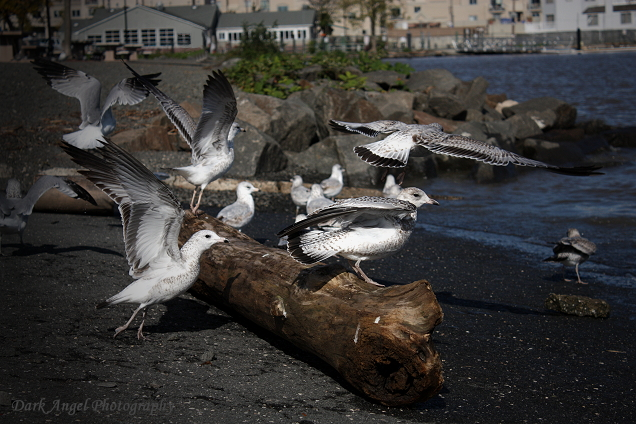
I love the sea. The circling gulls, the fierce wind, the crash of the waves. The sea is nearby the house and the little girl who owned me before used to take me there all the time. I should have used her when I had the chance; after all her sweet talk and tea parties she left me to rot when she moved away.

She would sit me in the sand and I would stare unblinking into the sun as she built sandcastles. I longed to walk and explore, not manipulated by strings but by my own free will.

I remember my master, he who made me, but I try not to think of him. He was a possessive and neurotic man who made me work for hours on end until I grew dizzy and faint. The curtains would finally draw closed, the cheering of children ringing in my ears as I collapsed in an exhausted heap. Day after day, often twice a day, I danced. I was locked up in a velvet-lined box and taken out only for performances. But it is thanks to him that I have the power I do; when he passed away I inherited his magic. On his deathbed, he clutched me in fear and sadness; coarse fingers traced the cold curves of my porcelain face, tears in his blind eyes. Then with shaking hands, he pushed me back into my box. I heard the lock click and I was terrified, believing I would never be taken out again.

Eventually, after lifetimes of darkness, the box was opened. The little girl who carefully lifted me out had my master’s eyes. His blood flowed through her veins, I could tell. Her little fingers had the same talent and she knew how to work my strings beautifully. I danced again but not without bitterness in my heart. Then she too betrayed me, left me hanging in the attic and disappeared, and I felt my plush stuffing turn to cruel cold stone.

***

Amelia crept into the attic late one night, not long after our first meeting. Balancing on an old chair, she carefully unhooked me from the wall. She carried me down to her bedroom where she sat me proudly on her dresser.

She got back under her covers and gazed at me in wonder. My dainty red painted lips smiled at her, my black glass eyes twinkled in the night. I blinked at her with long stiff lashes. I was so elated she had come to collect me. The magic was working. We gazed at each other until her eyes slowly closed and she drifted off to sleep.

I met her in her dreams. It was snowing there, perfect snowflakes drifted around us. We held hands and giggled as we spun in circles. For a moment, we couldn’t tell which one of us was the doll and which was the little girl. That made us laugh hysterically and we spun faster and faster until we tumbled in the snow.

After that, we spent every day together; she took me everywhere. She carried me around carefully so as not to tangle my strings, and she never put me in a box. Her feelings for me grew, forming that mysterious bond between child and toy. And so did my power, for it was the bond that fueled my magic. Nothing is more powerful than the genuine and pure love of a child, and she gave it to me willingly.

I always had pride of place on her dresser, glaring down at the plain and ugly toys that littered her bedroom floor. Dreadful tawdry things. I am one of a kind, handcrafted with a ceramic head, hands and feet; my soft torso is made of quality cotton, my features beautifully painted.

For weeks, I sat and watched her sleep, entering her dream world where we played together for hours. Nothing separated us. Little by little, her energy was becoming mine.

In her dreams, I showed her what to do, how to become limp and lifeless; empty. Soon it was I who danced, free and exhilarated, while she slumped in a dark corner, her eyes wide and blank. In the morning, she woke terrified, feeling drained without knowing why.

All night long, I chanted the spell that lulled her spirit into my form. I was coming to life. I began to feel a tingle in my toes and fingertips, a whirling in my belly.

Amelia grew more weak and frail. She dozed in bed most of the time so I could enter her mind and dance there during the day as well. But her parents were getting worried and began to interfere. They took her to visit the doctor; they took her out to do things, leaving me behind. They kept stuffing her with food hoping it would regain her strength. I had to work faster; they were getting too meddlesome.

I put one final image in Amelia’s mind – a gentle ocean, the sky an innocent baby blue, a stretch of golden sand. The next morning she told her mother she felt much better and was going for a walk down to the beach.

***

Amelia propped me in the hot sand. It was a perfect sunny day. I watched as she applied greasy sunscreen to her thin legs. To be honest, and to my surprise, I felt a little sad. A pang of bitterness and loneliness overcame me. Will anyone ever love me and take care of me forever, never to leave me behind, used and forgotten? The bright glare of the sun was hurting my eyes and the sand tickled my skin; my senses had awakened, and it was too late to turn back.

Amelia hummed to herself; she seemed almost content but I could sense her anxiety. The past few weeks had confused and frightened her; she knew something was happening but she didn’t understand what.

For a few moments, we sat together and stared at the rolling ocean and the bright horizon. Then she rose and walked slowly towards the waves.

I began to utter my spell for the last time. If I could manifest tears, a single drop may have run down my face.

The waves grew higher as I chanted, the ocean responding to my malevolent intent. Amelia hovered at the edge, the tide rolled in quickly, flooding around her ankles. I felt her little heart begin to race, her mind clouded with confusion. She walked further in.

Waves crashed over her head, pulling her under. She called out, a faint cry smothered by the roar of the sea. I watched her rise on the waves then sink again, her arms waving helplessly, her voice silenced by mouthfuls of water.

It took a few minutes as she struggled. Hungrily I sucked in her energy, my desire to live greater than hers. Her life force flowed to me as it drained from her, our bond complete. I felt myself truly come to life. I could feel my arms and legs. I touched my body, a strange sensation. My lips opened and a giggle escaped.

Ecstatic, I tore off my strings. It hurt as they ripped from my limbs.

I stood up carefully. In the distance, I could see Amelia’s floating body, another child lost to the magic of the toy kingdom. The waves had calmed; all was quiet except for a single gull that shrieked in the sky.

I began to walk, one foot in front of the other, just as I had been taught to do but this time nobody was controlling me and nobody ever would again.

I marveled at the tiny prints my ceramic feet made, proof that I exist.

~ Magenta Nero

© Copyright 2016 Magenta Nero. All Rights Reserved.

Damned Echoes

Ahhh Damnlings, into our realm of darkness you have wandered once more. A realm where words twist on the wind, and morals gain no purchase…

In the collection of prose set forth before you, you will find each of the authors has been constrained to a measure of one hundred to one hundred fifty words; two of which must be borrowed from the nether’s uttering. But fear not, for the Damned wear our shackles well and true – we shrink from no challenge. Sit, read, perhaps ponder… which two of the five words on offer would you chose to sacrifice for a story worthy of the ink that drips from the Pen of the Damned?

Why a sacrifice? You will never hear them Echoed again!


DE01_Cloud


My Mind Screams
Jon Olson

My old fishing boat, the Extant, rocks unsteady beneath my feet. I struggle to catch my breath — difficult after stealing something else’s last. Blood runs down the wrench in my hand, dropping off onto the floor already wet from the carcass curled against the wall. Even in the dim cabin light, I am repulsed by this abomination of nature; the unnatural pulled up from the depths in my fishing net. Its skin glistens, almost amphibious, but completely alien. Somewhere in the mass of flesh, bone and gore are its eyes; black, unemotional and lifeless. My mind screams, unable to comprehend the events that transpired. Grabbing a spare gas can, I douse the body. With a flick of my lighter, the ungodly is engulfed – burning its existence from my mind.


Fetid Hunger
Lee A. Forman

Bound to a chair in the center of a dark room I sit. Countless eyes stare, their yellow glow peering through thin slits in the ebony veil which encircles me. Hope of escape—fleeting, lost; I try to focus on the steady drip of rainwater from the ceiling, the only thing keeping me extant.

They blink in the hushed air, each subtle movement accompanied by a soft squish—a sound not human. I don’t know what beasts hide in the shadowy corners of this strange and unfamiliar chamber. I have yet to see them. Even their shape is a mystery.

Only thing I am aware of is their hunger. They reek of it. I don’t know how long it will be until they tear into me and begin to feast. But from the stench of their breath, I know it will be soon.


Pandemic
Zack Kullis

“….. no interim procedure for eradicating ……”

Dr. Livingston’s eyes glided numbly over the words. She liked simplicity, and this pretentious document could have been reduced to a few sentences. The cell-repairing microbes they created to combat the aging process mutated shortly after they were introduced to the general population. The Guardian Strain became a pandemic.

She looked at her bloody hands. As with millions of other infected, the cellular walls of her organs bloated with the infection, swelling with puss and blood before splitting open like roadkill in the heat.

Dr. Livingston touched the package her colleague sent, her sausage-like fingers leaving a trail of smelly ichor across the box. The blood-stained note was written in shaky handwriting.

“Cure”

Her trembling hand reached up and placed the only cure into her mouth. Ironically, the treatment did in fact come from a shot, she thought as she squeezed the trigger.


The Price
Joseph Pinto

“There.  You see it, now?  You see?”

Indeed, I did.  One of only two extant copies known to man.  There it lay beneath the glass.  “How did you gain such a—”

He waved me off.  “Does it matter?” sucking on his Gurkha Black Dragon, appreciating the white tendrils curling round the cigar’s tip.  “What matters is that I have it.  What matters is that it can be yours…if you’ve acquired its cost.”

“I have.”  I knew my associate’s fondness for cigars.  I knew his affinity for a virgin’s eyes even more.  I handed over my satchel, his fee exquisitely stored inside.  He parted his mouth; the peppery finish of his cigar wafted, tickling my nose.  Then he pitched forward, the strain I had swabbed along his cigar’s head seizing his heart.

I took my priceless manuscript.  I took back the sightless eyes.

I left him to his cigar.


The Wailing
Magenta Nero

I noticed the church while driving through drab countryside. I pulled over to look around. I was surprised by the age of the building, the yellow sandstone was coated with moss, crumbling grey headstones littered the churchyard. The wooden doors were locked but I managed to wrench them open. Dim light shone through the small stained glass windows, the air was thick with dust. Slowly I walked the aisle, glancing around as my eyes adjusted. I froze suddenly, spotting the draped figure that stood before the altar. It wore a long dress with a tattered train of ghostly lace. I heard the sound of faint sobbing. It turned towards me. With hands of blackened skin it lifted its veil and fixed me with a rotten stare. The wailing began and I fell to my knees, struck by the bitter heartbreak only the dead can know.


Mistaken
Tyr Kieran

I tried to tell him. My words started in a hasty shout, the syllables tripping over themselves as I shoved them past my chapped lips. It sounded all wrong. I couldn’t even recognize the words myself. Lack of water in these scorched days has left my mouth and throat so damned dry. With precious little time at hand, I strain, trying again, forcing my tacky tongue to dislodge and shape the sounds, yet it only rolls and twitches like a dying slug. The cold lightening of panic surges through me, lifting my heavy eyelids, raising my outstretched hands, but nothing can stop the downward arc of his weapon. The massive wrench is the last thing I see—stealing my sight on the first catastrophic blow. Warm blood wets my throat just enough for my plea to gain sound as everything fades to eternal darkness, “Not a Zombie”.


Judgement Day
Thomas Brown

On the last day of summer, the dead rose from their rest in the earth. He watched from his treehouse while they emerged. Thin bone. Domed skulls. Clenched hands unfurling like flowers in the morning.

There was nothing hurried about their efforts. They staggered to their feet, stretched, shed old skin and loose soil. When his Action Man fell to the floorboards, he imagined he could hear the creak of their necks as they stared skyward.

It took them hours to climb the tree. Fingers without tips wrenched slugs of grey bark. He watched them until he couldn’t bear to watch them anymore then dragged himself and a blanket into the corner.

It was dark when they finally reached him. She had on a veil; black, backlit with luminescent eyes. Even as she crawled closer, he wondered where his parents were, and when they were going to rescue him.


Perfect
Christopher A. Liccardi

In its extant, this was nothing new. It was strong though. It hadn’t been seen in ages not because it was weak, but because it was fast. This strain moved quicker than anything else they had ever seen.

“What are we going to do, Doctor Lee?”

Lee, an experienced viral biologist crushed what would probably be his final cigarette and stared though the haze of blue smoke. A pause…

“First, we die Janine. Then, we come back.”

“I don’t want to come back.”

“Actually, it’s as perfect as you could ever be. Complete harmony between the living and the dead. You’d be not alive, and yet mortally perfect. Besides, you don’t have much of a choice.”

“Do we have to drop it on the city?” Her voice quavered the slightest bit.

“We do but it won’t matter where you are in a few hours.”


Revelation
Nina D’Arcangela

Like the maelstrom that swept in her tide, she swirled with a tempest of fate. Those before her attempted to flee; begged forgiveness for their evils. Misunderstood lives, unappreciated deeds, this lot unaware the veil had thinned solely to allow their pardon. Gleaming ebony skin that smoldered of embers left to flame, she bore down upon them with brutality unknown to these worthy heathens. Necks twisted most unnatural, bodies rent of their companion cog and spokes, these children of misdirection now granted reward for actions unprovoked yet savored by that which waits. As claws struck and teeth ripped, screams wailed the song of souls unburdened. Mother to the immoral, sister of the dishonest, beacon for the misguided, she stilled as the slop of her task struck a final note. More would come, born of those who kneel in perverse fealty. In the interim, the void of silence stirred her home.


Each piece of fiction is the sole copyright of its respective author
and may not be reproduced without prior consent. © Copyright 2016

White

They preferred the angry gnash of the storm over the silence.

Like nervous teeth, the panes chattered. The rafters creaked; dust floated down upon their heads.

The man—the man who had been taken in—spoke in a hoarse whisper. “I’ll go. I’ll do it. If it wasn’t for your family, I’d still be out there. Or worse.”

No one answered. No one argued his point, either. Finally, the father spoke. “The shed is about twenty yards back. It’s unlocked.”

The man massaged his crooked chin. “Door swing in or out?”

The father believed it was a good question to ask; this man was sharp. Pride swelled within him. It had been harrowing, but his family had done good, risking their wellbeing to drag the man in from the outside. But a pit burned the father’s stomach. The man had gotten lucky once. Luck would not prevail a second time. “In.”

“Long as the wind didn’t bang it open, I’m good.”

The father pressed his hand against the pane, its surface cooling his fever within. He could see nothing beyond the glass, however. “The generator is in the back, set on blocks. It should be deep enough into the shed to be protected. When you stand in front of it, look down to your right. The gas can will be there.”

“Only one?”

The father felt his family press behind him. Mother’s face stooped lower than the boughs of the snow-laden trees. What remained of them, anyway. She clutched their children—son and daughter—under breasts that hadn’t been touched in years. “Yes.”

“Mm-hmm.” The man knew what that meant. The generator would power the house for another full day, at most. “I won’t allow your family to grow cold. I’ll fill it. When it runs out, we’ll figure out what’s next. Together.”

The man shrugged into his coat, careful not to worsen the tear along the shoulder seam. He tugged his wool hat until it hung low over his brow. He looked at the children, the souls-sucked-dry children. “Together,” the man repeated, not sure for whose benefit he’d said it, and cradled his rifle in his arm.

He reached for the door, but the father seized his hand. “Keep low. Don’t stop.”

The man grunted and was ready. The father twisted the knob. The wind shoved the door aside, and immediately the shrieking swallowed the man as well the snow, the blinding snow. The father threw his back into the door, snaring the blizzard’s icy tendrils in the jam. The storm howled; the panes rattled like tormented bones. “He’ll make it,” the father said, talking to the walls. “He’ll make it.”

The father watched as the man sunk thigh deep into the drift, watched and lost him to the white. The blizzard erased his footprints in one exhale. Then he waited. The minutes passed. “We needed him,” he said to the mother. “It could’ve been me instead.”

“It should have been you instead.”

He exhaled icy smoke, then chewed the inside of his mouth. He slowly turned around, keeping vigil at the pane. Snowflakes clung, mounting and growing ever deeper, white locusts of a great plague. Minutes. Minutes. Minutes passed.

“Gas can’s emptied by now.” The father visualized the man’s progress, the man’s steps. “Priming it…cranking it over…he knows what he’s doing…he knows…”

The children sniffled on the hardened snot clotting their noses. And their mother hugged them close to a heart that had long grown cold.

The father clutched the knob. Waiting. It vibrated in his hand. “Any minute.”

A gust charged the house, a mighty bull outside the walls. The rafters groaned; dust danced upon their heads; small, ghostly marionettes. “Any time now…”

He heard a distant crack. Another trunk snapping. Another tree succumbing to the storm. He thought of his neighbors, the elderly neighbors, for whom he’d once mowed their lawns. “Any…time…now…”

A spirit beckoned from the nether; the man emerged, white, spectral white, coat and hat and legs white, face and brow crusted in wind-driven snow. The rifle slung like a long ice shard over his shoulder. “I told you,” the father said, voice rising like the wind, “I told you!”

The man, mere feet from the door, polluted the drift with a crimson spray. The father jerked from the window as if struck. But his eyes stuck to the pane.

They swirled round the man, the needle teeth, the razor claws, unnatural piranhas of winter’s blight, tearing and cutting as the gale disguised their intentions. The wind kept the man upright, and the drift kept him mired. And they swirled, swirled till the man was no more.

The crimson spray disappeared, the drift a new blank canvas from which to paint. The man’s entrails clung briefly to the pane before slipping away.

He shuddered, the father did, but he would not cry. He covered his mouth. “We lost a good man.”

Then a loud click in the father’s ear. “We lost a good man,” the mother said, “and now we have none.”

The father felt the cold metal against the back of his head. It pushed forward, forcing him toward the door. “We have power now. When it runs out, we’ll figure out what’s next. Together,” the mother said to her children.

“You won’t survive without me.”

“Maybe not. But I sure as hell won’t die with you.”

The rifle burrowed into the base of his skull. He clutched the knob. He would freeze to death without a coat, without the proper clothes. He prayed that would be the best thing to come.

The father stumbled into the maw of the blizzard. It chewed him alive.

“There, there, my babies,” the mother cooed to her children, watching as their father filled the pane. “There, there.”

~ Joseph A. Pinto

© Copyright 2016 Joseph A. Pinto. All Rights Reserved.

wolf_rule_full_sat

Blood and Dirt

John stooped down and picked up a handful of the warm red dirt and let the fine material fall through his fingers as he hiked.  The land had always reminded him of blood.   It wasn’t the color – that would have been a cheap and easy connection.  No, it was much more profound than that.

Blood was life.  Blood also meant death.  It joined the two in an unbreakable companionship of opposites that few truly understood.  This land was the same way.  It was both life and death, and he appreciated the connection.  More importantly, he understood and contributed to that connection. 

His boots moved silently across the terrain, disturbing very little, but the damned pack animal wasn’t quite as respectful.  It scattered rocks and dirt as it plodded along behind him.  John stopped pulling the bridle and turned around.

“I don’t know why in the hell I picked you up,” he cursed as he pulled his water bottle off the pack.  “There were plenty of other animals I could have picked….  I don’t know why I bother talking to you either, you sure as shit can’t answer me.” 

John took a mouthful of sweet water and watched the flies land on the beast’s head and face.    The damn thing was worn out.  At one point in his life, before he decided to break away from the civilized world and reach back to his natural self, he would have felt sorry for the animal.  But now that he had been out here for a few years, John realized that life was no different from death, it was just a different way of being a part of the land.

He put the water bottle back in the heavy pack and coaxed the tired creature onward with a stiff pull of the rope and bridle.  They were almost back at camp.  Spastic breathing and grunts behind him caught his attention.  John turned to see his animal lose its footing in the rocks and nearly dump the heavy pack.  He dropped the rope and grabbed the bit sandwiched between the animal’s broken teeth and made sure it didn’t fall.  The thing’s eyes were wide with fear, red from exhaustion, and full of an almost human pleading.

“Fine,” he said as he grabbed the bridle and continued to hike.  “This is your last trip.  I’ll cut you loose at camp and see about getting a replacement.”

John was surprised to see the animal managed the rest of the trip without any issues.  It even seemed to hurry a bit, as if it understood what he told it.  But that was silliness.  He really needed to stop attributing human emotions and comprehension to simple creatures.

Camp was inside a cave at the end of a hidden canyon.  It offered simple relief from the heat of the day and the cool of the desert night, as well as the isolation that John wanted.  The animal stopped at its spot and let him shackle its legs in place.  Proper training and more than a few beatings had taught it to follow this routine.  He pulled the pack off the sweaty beast and placed it against the back of the cave.  John whistled a nameless tune as he poured some water into a bucket for the creature.  He untied the bit from behind the animal’s head and let the thing drink its fill.

The thirsty slurping came to a stop and the animal pulled its head out of the bucket.  Its eyes watched him with renewed energy as John started the fire.  The thing made mewling noises and groans that probably meant something, but he paid no attention.  Animals that have been properly dealt with didn’t speak.  He had made sure of that personally.

“But if you could talk, would you ask for me to let you go?” he asked as he stood up.  “Would you ask to be released into the wild?  You might, but that would be a bad idea.  Why?  Because you are tame.  The land would kill you.  That’s how you and I are different.  I’ve become an integral part of the land, and as such, I live.  You are tame, like so many of your kind, and as such, you die in this land.  It’s your natural place.  Tonight I’ll set you free, but not as you might wish.”

The groan and guttural cry from the creature was perhaps the most pathetic thing he’d ever heard.

“Uhwana neee!”

Tears welled in the things eyes and fell in heavy drops to the red dirt at its feet.  John reached behind his back and pulled out his knife.  The animal kicked and pulled against the restraints, heedless of the damage it was inflicting on itself, apparently aware of what was about to come.

“Shut up,” John growled, furious at the weakness displayed by this thing.  Why couldn’t it simply understand its place?  He swung his blade carefully and smashed the thick butt of his knife into the side of the creature’s head, sending it crashing against the rock wall of the cave.

Large drops of blood began to patter slowly to the red dirt that turned a deep crimson with the addition of the offering.  The land accepted the blood and drank it thirstily.  It was indeed time.

John knew there should be nothing to impede the flow of blood, so he grabbed the leather strap that secured the cloth to the beast.  He had found it best to keep them covered while they hauled his gear for them.  They seemed to last a little longer.

He grabbed the leather and cut through it with his knife while the animal was still dazed from the blow.  John pulled the belt through the straps, dropped it to the floor, and quickly sliced through the flimsy material.  The dirty shirt fell in a heap on the ground.  John could see the thing was starting to come to its senses so he quickly cut away the Levis.

“All right, let’s get this done,” he said and slapped it across the face.  John wanted the animal to be lucid as he offered its blood to the land.  The creature recoiled, fear shining bright in its eyes, and it tried to speak again.

“Preeeezz…  U wanna nee!”

A crucifix swung on its necklace, the tarnished metal bounced across its filthy skin.  Chest hairs shook with the silent sob that overwhelmed the creature.  Cold air whispered through the cave and caused it to shiver, accentuating the miserable thing’s shaking.  Its hands, bloodied and useless, had been handcuffed behind its back since the day John picked it up.  A pair of emaciated legs wobbled as they tried to keep from collapsing.

Maybe it had been a man at some time, John wondered, but that would have been a long time ago.  Most of what he saw walking around the rest stop near the highway didn’t qualify as human.  Sure, they had their vehicles, their fancy clothes and families, but they had stopped being human the moment their lives became measured by likes and comments, and their self-centric view of everything around them guided their narcissistic interactions.  In a few days he would hike down to the rest stop and pick up a new beast.  They were nothing short of animals. Every one of them.

He pushed its head against the cave wall and pressed until the artery in its neck was easy to find.  The creature tried talking again, this time definitely sounding like a please, but it was hard to enunciate when your tongue had been cut out.  John remembered that moment very well, not because it quieted the shouting and pleading, but because it was the last time he had eaten meat.  It had been a small meal.  That would all change in just a minute.

John placed the tip of the sharp knife against the skin that pulsated from the nearby artery and looked into its eyes one more time.  He couldn’t tell if the creature was pleading for the blade or pleading for freedom.  To John it was all the same.  To the land, it was all the same.

The blade cut deep and the warm blood sprayed.  The first slice of meat sizzled in the heat of the fire before the blood stopped flowing out of the deep wound.  John ate the meat, the land soaked up the blood, and the sweet companionship of life and death continued under the desert moon.

~ Zack Kullis

© Copyright 2016 Zack Kullis. All Rights Reserved.

Jerusalem

Lambing season arrives with fine rain and the moan of distressed ewes. John has just sat down to dinner when he hears them, the sheep’s cries mingling with the whistle of the kettle. He hasn’t been through the door for an hour and his feet ache. Evening sun catches the dust and makes silhouettes of the shattered window pane. He eats alone with his thoughts and his chipped mug and the scratching of mice in the walls.

When his plate is cleared, he takes it to the sink and runs it under the tap. Brown water catches the worst of the stains. Outside, a crow laughs. Looking up from the sink, he stares out across the back garden to the bird and the plot where his father is buried. It isn’t much, but it means something to him, and it is ritual; the first day of every March he books time off from work, packs an overnight bag, and makes the long drive into the hills to visit his dad.

A wooden cross marks the spot, and another, and another; generations of Shepherds, laid to rest in the earth. Retrieving a dishcloth and an old knife, he wanders outside, crouches by the crosses, and scrapes the worst of the moss from the wood. Cobwebs cling to the crossbars; he brushes them away. He smokes while he works, lips sucking and twitching around his cigarettes when his hands are busy. Across the hills, the ewes continue to bleat.

When the worst of the nettles are stripped back and he runs out of cigarettes, he retires indoors. Lying on the single bed in the room where he grew up as a child, he listens to the house, the groan of the floorboards, the tapping of the rain on the windows, and he waits.

At some point the sun sags, wavers, dips below the rolling mounds. The rain hammers down, then peters out. Eventually he hears the bleating of lambs. The sound draws him from the bedroom, across the dark hills. One a.m. nips at his fingers and the tip of his nose, turning his breath white on the air, and as he leaves the yard he almost slips on the dark stone of the step.

“Jesus!”

He does not have to walk far before he sees them. Moonlight illuminates the parade as it winds its way through the trees. Where the branches allow it, the light makes silver outlines of pale limbs, bare footprints pressed into the mulch and, held by thin hands, clutched close to sunken breasts, severed heads; the old dead nurturing the new with ageless love and sour milk.

The stiff-legged procession stretches both ways into the trees. They might always have walked here; an endless wake marching solemnly beneath their cowls. He moves silently closer, his approach masked beneath the clicking of bone and wet sucking sounds, which he hopes is feet sunk into mud and not cold mouths hungry at stiff teats. He does not speak, but in his head repeats an old hymn, hoping it might help him, ground him, keep him sane and safe from demons and the dark.

It is many years since any sheep have grazed here. Not since his father passed have livestock of any sort dotted these hills. Idly, he wonders what he is doing here. Not just tonight, but last year, and the year before that, and the one before that. He thinks about his guilt at having abandoned the farm, and his love for his father, and his shame at the generations of slaughter committed in the family name. He can never shrug that shame, but he can pay his respects to the dead. For one night a year, he can manage that.

He is still standing, watching the march, when a piece of deadwood snaps underfoot. The branch is small, the sound weak, but it still cracks like a gunshot in the dark. For the most part, the procession continues heedless, all except one of their number. Closest, it stops in its tracks. The mud at its feet is a mess of cloven tracks. With the inexorable slowness of the ages, it turns its face towards him. A scream fills his mouth.

Night has sapped the colour from the world but he can still make out spring: ghostly lilac blossom, branches heavy with shoots, fat roots, and the bleating of lambs, long since taken to market but revived on this night when life courses renewed through the wet, blood-soaked loam.

~ Thomas Brown

© Copyright 2016 Thomas Brown. All Rights Reserved.

Damned Words 16

DamnedWords_16

Fading
Christopher Liccardi

Mitchell sits on its broken foam seat, feeling the pain diminish. Blood loss pulls him from his cares and worries. He can feel his hands slipping from the sides of the chair. His choice was made by another, but not the one holding the blade. It was the demon in the chair that made the choice. It spoke to him and told him what it needed; more blood. He closed his eyes and the voice faded until it was a whisper. The last thought on Mitchell’s mind wasn’t death, but the chair. Who would feed it once he was gone?


Barbaric Elegance
Jon Olson

Nothing like this had ever been found before; the diggers unsure of their discovery. What is it? Excitement, confusion and terror glisten in their eyes. Months spent sifting through rubble, burrowing into the past with little to show for it; very few indications or evidence to reward our labor. Today, we find this: elegance crafted by the barbaric. Its craftsmen, the humans, all but erased from history; consumed by extinction. Is it safe? There’s nothing to fear, yet reassurance is met with hesitation. Like the others, it will be cataloged and destroyed; recorded and wiped from existence like its makers.


Metamorphosis
Zack Kullis

There was nothing quite as perfect as the spoiled beauty of the fetid and rancid.  Everything his eyes touched was painted with the distinct colors of decomposition’s palette.  It took him years to fill his sub-basement with thoughtfully selected detritus that would breed the corruption and blight he so loved.

Nearly a decade of carefully chosen carcasses littered the floor, blessing this place with their funk and ghastly splendor.  It was perfect but for one thing – himself.  He clamped his eyes open and shackled his hands to the chair.  Death would not keep him from watching his own loathsome metamorphosis.


Throne
Magenta Nero

Death has long since swallowed him whole but he believes himself to be living. His face is shrunken, folded upon itself, closed like a flower at dusk. His eyes are ringed with grey. Pain wrestles with his body as he lies in bed. Each morning he rises, dragging his disease ridden leg behind him.

Born of clay, with the pride of kings, he judges all and pardons nothing. He survives alone. One by one he has severed all ties with the living, unable to forgive or forget. All that remains is the vision of a throne, righteous amongst the clouds.


No Work, All Play
Joseph A. Pinto

Interment had delayed my work.

Comprised only of broken rock and lost time, my resting place had been disturbed in dubious fashion. Ignorant thrill seekers they were, tipping bottles to mouth. One stumbled callously into my chair.

Stepping from decades of grit, my straight razor I drew. I had forgotten the power of my blade. But it had not forgotten the power mine.

Throat utilized as strop to steel, his blood made me whole to the world again. Within the deep gloss finish of the blade, I admired my reflection.

“Handsome devil,” I crooned and busied myself in his lather.


Delusion of Freewill
Nina D’Arcangela

This is the place I was born. Not brought into the world, but given life; purpose. Society could no longer sustain the delusion of freewill. It had become a blight; a poison that corroded the beast from within. No, this world was not intended for choice, it needed structure, guidance; a singular hand to rein it. I succumbed to that hand. Strapped to the chair, current charred my flesh, molded my mind until I became a drone; re-purposed for the greater good.

Born again as a bone man I had but one task – pick amongst the piles of the dead.


Under The Knife
Thomas Brown

He came here last year for Botox. Funny how they find their way back. Rotten cats, retracing old steps. Stumbling onto the chair, she flails, snatching a scalpel from the steel tray.

Decay has done terrible things to the man’s features but she remembers him. His Tie Dye shirt, green Crocks, the way he’d smiled when she’d fixed his forehead.

He is still smiling now. A shovel has seen to that; his lips red and wet. They all look happy, dead and indifferent. He looms over her, hands outstretched. Smiling back at him, she takes the scalpel to her throat.


Home, Sweet Broken Home
Tyr Kieran

I smile at the chair, despite its imperfections—rusted metal, cracked leather, speckles of dried blood—it’s the only thing that feels like home. Sitting on its cool leather so many years ago, I had my first conflicted taste of solid food. From diapers to teenage acne, this chair held me for many forced meals and brutal punishments. I only tasted freedom for a few moments annually, on my birthday—the only gift my mother ever granted. Eventually, I outgrew the chair and captivity. Now, to help celebrate my birthday, Mother is the one temporarily freed of the chair’s confines.


Each piece of fiction is the copyright of its respective author
and may not be reproduced without prior consent. © Copyright 2016
Image © Copyright Dark Angel Photography. All Rights Reserved.

4320 and the Hard 6

As soon as he landed at McCarran, the heat-baked shimmer of city life was visible, vibrant. He stopped on the jetway to peer through the sooty glass. The reflection was breathtaking even from three miles away. This place really was a treasure trove waiting to be taken by someone brave enough to grab it.

He pushed up the ramp toward his new home and caught the smell of decay as he passed into the open-air walkway. Something must have died on the tarmac; it was faint but undeniable. For an entrepreneur about to open his first hotel in sin city, this might have seemed a bad omen, but not to him; he didn’t believe in that shit.

Two hundred hours: The casino business had been good. His first ten days were coming to a close and he didn’t see anything but the glitter and sex. Fuck if he could remember the names of all the girls he’d screwed or places he’d been.

That smell of decay came and went. He couldn’t quite understand why a city that spent billions on water couldn’t keep the scent of road kill away from the tourists. There were moments he noticed those around him seemed older, more aged and tired, but they were fleeting thoughts drowned by his own youth and vitality.

He sat in a lobby bar some place on the strip and sipped his Old Fashioned. It tasted off, but he was distracted. The waitress who had been serving him, Lina, came over and sat next to him on the leather sofa. She touched his shoulder, asked if he wanted another drink. He didn’t answer until the fingers sliding up the inseam of his expensive slacks reached their intended goal. He winked at her as she stood and walked away. She looked back over the crowded bar with a very suggestive grin.

Five hundred hours: Getting money from this place was easier than getting laid, but that damn smell was everywhere now. He couldn’t go more than a few hours without noticing it. Something was really wrong around here. Nobody else seemed to notice though. He called the city but they found nothing.

He saw Lina last night; the waitress with the suggestive grin and the wandering fingers. It was a good visit. They had camped on the floor of what would be the Casino Manager’s office. Lina had done all kinds of things to him. She seemed tired though. Maybe all the late nights were getting to her. He liked Lina. He promised to take her away once the project was over.

Twelve hundred ninety hours: His vision was coming together. The installation of the new statue of Seduction made it all seem real. The thing was nearly forty feet tall and sat hunched on all fours. It looked like a cross between a gazelle and a unicorn.

The entire thing was cast in gold, which was typical for Vegas. The creature seemed to have flowing hair, like it was caught in a strong breeze. The new hotel manager had called it a Kirin or something. Damn thing looked like it was watching you all the time.

The legend was that the beast brought prosperity and luck, or some shit like that. So far, it seemed to be working. Even the smell of decay had left for a time.

As the staff walked past, they would touch the damn thing whenever they came and went from the project site, but he refused. At first, it was mostly the Asian staffers and construction people, but eventually, everyone was doing it. They joked with him about not offending one of the gods, but he didn’t believe in that shit. He had plenty of women, money and luck.

A few days later, the smell was back and he noticed the statue started to take on a tarnished look.

Lina took him out to dinner that night. She looked older, but said she was fine. Fine enough to make him dessert from under the table in between courses. Certainly finer than the food he sent back. It was rancid. The waiter smiled a tired look and made no complaint.

He looked around the restaurant and it dawned on him that the entire place was filled with older couples trying to look young. Strange thing was, he never noticed it before.

Twenty-one hundred eighty four hours: Just over three months and the new construction was nearly done. The place should’ve looked great, but didn’t.

Everything started to take on the worn-out look. Even the women around him no longer looked appealing.

He had gone out to the Neon museum a few times when he first arrived. The desert had stripped all the luster off those signs at the old bone yard where everything went to die in this town. That’s how this place was starting to feel. What the hell was going on around here?

That night, the statue looked worse than ever. God, were these people pissing all over it? How does gold lose its shine?

He found a security guard in the cash office playing some game on his cell phone. He told him to get off his fat ass and cover that fucking statue before he had to pick his teeth up off the floor; he wasn’t paying him to goof off. He also wasn’t paying someone to come out and buff that statue again.

As the guard waddled away, he remembered the young man who sat here not three weeks ago. This guy couldn’t be him. That kid was young, vibrant; alive.

He needed a drink and to check in on Lina. She hadn’t been feeling well all week and had stayed home from work. Maybe they could spend a little time rolling around on the pile of cash he kept in the apartment.

Three thousand ninety hours: The project was done in record time. He wanted to celebrate by getting royally fucked-up with Lina. Maybe a threesome and some really high-end shit would put things right.

The contractors all looked like they could use twenty years back on their lives instead of the bonus they got.

When he went to see Lina, she wasn’t doing any better. She had invited a few friends over that they had partied with not long after he arrived. After putting away an eighth of an ounce of blow on his own he could hardly remember much, but they had done some pretty kinky shit. He woke up with blood all over the sheets, and what should have been two very pretty ladies playing with each other. But these ladies weren’t the beauties they seemed the night before; they almost had to hold each other up. Everything on them was saggy, tired. The changes around him were so drastic, but had been so subtle in coming. Maybe all the nose candy was getting to him. He didn’t know, but he would worry about it another time.

Forty-two hundred hours: He was just about ready to call it quits. The place smelled of death and old rot. All of Vegas had changed somehow. It seemed to be everywhere.

Lina hadn’t even come over last night.

The grand opening was in five days; one hundred twenty hours and he didn’t think he was going to make it. This place was driving him crazy. Time had sucked the life out of everything here; everything, except him.

What the fuck was going on around him?

Forty Three hundred hours: He woke up that morning with no memory of the last few days. The first thing he needed to do was take a piss. The second thing was a shower; he stunk to high heaven. The smell of decay was now everywhere. It permeated his clothes and his hair.

As he showered, he noticed the water had a bad odor, too. He would need to call the system guys and find out if there was something wrong inside the hotel. No room for screw-ups on opening day.

He went to the entrance of his suite to get his breakfast. It was delivered every morning so he didn’t have to waste time looking for a place to eat. He opened the door and the cart was covered in flies. What the fuck? He lifted the silver plate cover and nearly vomited all over himself. The food had been there for days.

He ran back to the bathroom, trying to contain the bile he was retching, and almost made it.

Once he got himself under control, he picked up the phone in the living room and dialed housekeeping; five rings, no answer. He stormed out of the room. If this staff had gone on strike already, somebody was going to pay. The hotel wasn’t even open yet and already things were falling apart.

He ran through the hotel and found everyone was in their appointed places. They had died there; been mummified in their uniforms and with their assorted props and tools. As soon as he realized he was the last person left alive, he noticed the smell had finally gone. All he inhaled now was dry age and old, worn-out life. That’s when he finally snapped.

He left the Seduction one final time, 180 days after he first arrived. He ran off into the desert and only the Kirin was left to see him off.

~ Christopher A. Liccardi

© Copyright 2016 Christopher A. Liccardi. All Rights Reserved.

In The Eyes Of A Victim

He waits behind the crowd, swaying in a corner—visible, yet perfectly forgettable. His incoherent mumbling is as much a disguise as the layers of filth he stole from the corpse of a homeless man only a few hours earlier. The corpse, when alive, had spent most of its time begging for change in the very spot this impostor now stood—both shuffling feet and jingling coins in a cup.

The bustle of men and women blindly swarms past, cramming onto the subway platform with a narrow, narcissistic awareness. Hot gusts of air swirl through the tiled alcove as trains rumble along distant rails, pushing and pulling putrid fumes that nearly mask the scent of urine on the man’s clothes.

I watch as he watches.

His eyes flit from face to face, searching for the right one, the right moment.

A train arrives in a whirlwind of garbage and air pressure. The crowd tenses, impatient with unopened doors as the transport slows. When the train finally stops, it releases a horrific screech like the piercing wail of elephants at slaughter. The sound ricochets off the tile walls as the vessel sets free its detained occupants. Squeezing past one another, the new commuters fill the train beyond capacity and abandon a few on the fringe. With a faltering chime, the entourage departs. One of the forsaken hurls obscenities before jogging back up the steps to find another route home.

For the moment, two would-be passengers remain on the platform. The practicing beggar continues his feigned self-involvement while venturing further from the wall. I believe we both sense the moment ripen as a young man scuffles back to a bench, delves into his smartphone—earbuds and all—isolating the final commuter.

A young woman stands alone, gazing down the tunnel that will deliver the next train. Her appearance and demeanor seem average until I glimpse her blue eyes. Beautiful, yes, but they hold the light to which killers flock: fear.

I see him, with such subtle motion, skulk his way to the girl. Her head turns toward the movement, or possibly the smell, just as he makes his move. Those anxious eyes pop open to their fullest, quivering, clamoring—fueling her attacker. With a hand clamped over her mouth and a firm arm locking hers in place, he yanks the girl around the corner and out of sight.

This is it; the moment I’ve been waiting for. Over seven months of surveillance to finally catch him in the act. Today is my day!

My body tingles with cool adrenaline as I leave my perch to follow. Traversing the platform, I search for potential witnesses. None.

He is good.

I hear the next rush of commuters spilling down the steps and into the station behind me as I slip around the corner in pursuit.

Down a ladder at the end of a service ledge, I follow his path along the tunnel. Darkness swarms me after a few paces. The distant percussion serves as a constant reminder of the next train’s inevitable approach. Urging my legs beyond their usual lope but trying to remain cautious in my footing, I hurry toward the intersection ahead. Green utility lights mounted on the tunnel ceiling casts the open crossroad in faint light that seems to accentuate the garbage, filth, and overall disrepair as if it’s the emerald city that time forgot.

There has to be an old storage locker or maintenance room here; it’d be the type of place he would use as his ‘art’ studio—an enclosed space, full of useful items, and near the echoing rumble of subway cars that mask the inevitable screams.

Scanning through the murk, I spot the entrance a few yards away in one of the connecting tunnels. It takes a few moments of stepping over rails, refuse, and even the rotting corpse of a mangled dog to arrive at the door.

I stand there for a moment, staring at the threshold, catching my breath and collecting my thoughts. Two muffled voices float through the barrier, one significantly more than the other.

Gently squeezing the cold metal latch, I confirm my suspicion and set to work with my picking tools. Wincing at each little click, I manage to unlock the door without hearing changes within.

After a deep breath, I draw my weapon and creep inside.

The walls are lined with supplies for both cleaning and electrical repairs; the odor of ammonia is prominent. A breaker box stares me in the face from the far wall before the space takes a ninety-degree turn. I ease the door shut behind me and strafe around the corner with my gun level.

His back is to me as he attends to the victim. She’s restrained; wrists and ankles handcuffed to steel conduits jutting from the wall; an oily rag used tightly as a gag. Her blouse is ripped open; a shallow cut glistens between her breasts. The woman notices me first—her eyes widen in a silent plea. Her shift in expression must have alerted him as his knife stalls in mid-slice along her cheek.

“Freeze!” I shout. “Lower your weapon.”

The man turns slowly, shoulders slumped, hands out in placation; but once he sees me, his demeanor shifts. “Who the fuck are you?”

“The man who’s watched you long enough to know everything, Mr. Barton.”

“You don’t look like a cop, old man. You a detective?”

“Does it matter?”

He eyes me up for a moment. Sweat rolls down his brow. “Are you gonna arrest me or not?”

“Me? No.” I reply, lowering my gun. “But whether you still end up in jail tonight depends on you.”

A raised expression of surprise washes over both captor and victim.

I continue. “My name is Owen Dunning and I’m in the market for a new vendor. I need a man of your interests and abilities—I want something that you can provide.”

“Like what, exactly?”

“Human organs.”

The woman screams into her gag and struggles with the handcuffs, rattling them against the pipes.

Mr. Barton silences her with the back of his hand and her body drops. Motionless, she hangs from her restraints as he returns to the conversation.

“You want me to sell you body parts from my victims?”

“Yes. But don’t worry, my needs won’t interfere with your…art.”

“Why don’t you just buy from the morgue, or something?”

“Come now, Barton. Do I look like a desperate idiot? I’m an aficionado. I demand quality and freshness.”

He stares at me for a moment, a long gaze across the bridge of his nose. “An aficionado, huh? These’re souvenirs…for a collector?”

“No. Rare delicacies for a connoisseur.”

Another stare, but this time his expression has the air of inquiry rather than apprehension.

“In exchange for my requested cuts,” I explain, “I offer you generous payment to fund your operation and my assistance in maintaining your freedom and anonymity. Do we have a deal?”

“Deal.”

I produce an envelope full of cash and hand it to him.

He accepts it with a Cheshire grin. “What’s your first order, Mr. Dunning?”

“I want to taste her soul—taste her fear. Those blue eyes of hers would be divine.”

~ Tyr Kieran

© Copyright 2015 Tyr Kieran. All Rights Reserved.

Globules

I’d seen it before – glimpsed it from the corner of my eye as I walked past the open doorway – but never had it revealed itself to me so openly. Today, as I glanced back into the guest room certain that I would see nothing, there it was, looming before me. It stared back, eyes the color of onyx, seething with anger and intent. Its clawed hands clenched into fists, its interlocking teeth bared in a snarl, its lips quivered with menace, and its chest heaved with hostility and rage. Foulest of all was the opalescent skin, skin that dripped putrescent globules of mucus onto the wooden floor. It conveyed a hatred beyond belief.

Frozen in the moment, I stood stock-still. The crash of the laundry basket hitting the floor yanked me back to the here-and-now. I turned in a vain attempt to escape but the thing spit and leapt into the air. I tried to scream; a near silent whimper was all I could manage. Just as I made my way through my own bedroom door, its full weight landed upon my back. It tore at my hair, ripped apart my clothes, and shredded my flesh as it dug into my left shoulder blade to pull the scapula free of the muscle and sinew holding it in place. I fell to the floor taking it with me.

Having found my voice, I screamed at full volume with every ounce of breath I could manage. It screeched in return, and tore at my face, rending my lip in two, and slashed bits of flesh from my cheeks. All the while, I dragged my body forward, desperately trying to escape. Then it bit into the base of my skull – the sensation of its teeth sinking in seared through my brain and halted my forward motion. I lay there waiting to die; it sat upon me, savoring my anguish.

Then another sound reached my ears; a venomous hiss. In a single fluid motion, the thing retracted its teeth, whipped around, saw the cat hiding under the bed, and used its clawed feet to leap into the air; further gouging my back as it fled. I lay there terrified to move; terrified not to try. It was no use, my body would not respond. The cat crawled out from under the bed, sniffed me and mewled deep in his chest as if asking forgiveness before he ran off, abandoning me to my fate.

I lay there alone, unable to move, panting for breath.

From somewhere in the room, the sound of a glob hitting the floor echoed off the wood.

~ Nina D’Arcangela

© Copyright Nina D’Arcangela. All Rights Reserved.

The Filth Below

It doesn’t matter how long he stands before the window staring down at the streets below. They always show the filth and decadence this city is noted for. This is a place of evil, yet no different from any other city on this disgusting, spinning rock. Humanity exists, if one wishes to call this totality of debauchery by such a term, at a base level. No more; no less.

Selchor twirls his cane on the carpet under his feet, moving it back and forth between both hands. “Guess I should stop my pessimism from destroying my hope for those who do manage to overcome the odds,” he thinks. “After all, I had enough expectations for some people that I chose to return and give a little help to those needing it.

“Of course, there are the others.”

A smile crosses his lips now. Why should he lighten up over what is to happen? He doesn’t even know where his travels will take him tonight. He never knows. The evil acts as a conduit, drawing him to it – not for glory, but to achieve his mission. “Search and destroy. That’s me. I feel like a comic book hero.”

The sun drops down over the city, the deep tunnels carved between the high buildings sucking the light away, much as those prone to wielding their hatred take the light away from the good. Selchor likes the Darkness. His many lifetimes have given him visual acuity that mortals can only long for. Nothing escapes him. All his senses are on high alert. The stench, the sounds, and tastes, join in, as does the evil pulling at his soul, the touch telling him what must be done.

He chooses to walk down the stairwell, rather than use the elevator. Six floors are mere child’s play for him. Many times in the past he has had to handle situations on the stairs that needed to be addressed, as only he could do it. No place in this city is safe. Not even the stairs of his own building.

The tell-tale tapping of his cane along the sidewalks makes some in his path go down side streets in quick retreat. Though Selchor has not lived here for long, he has become a legend of sorts. He is more effective than the old cop on the beat, the guy who knew everyone and who people felt safe around. Nowadays, safety and trust are arbitrary. There are no absolutes.

Valentine’s Day is a day set aside for love, but it’s not being felt in one multi-dwelling brownstone close to the financial center. The conduit tells the truth to Selchor. He knows something is wrong. Big business and politics have joined forces again. Even from this distance, the cries reach him: particularly those of the children.

A wrecking ball already sits off to the side of the building when Selchor arrives. These bastards are in a hurry. A few police cars are there, and the cops are talking to several residents, telling them that they have to go.

“But we never received any notification that we had to leave,” a distressed women tells one of them.

“That’s not what I’ve been told,” a police sergeant hollers back. “Everyone was notified in writing a few months ago, and I have a signed go ahead order to vacate from Judge Patterson.”

“Judge Patterson is an on-the-take, bottom-feeding piece of shit,” Selchor says, as he sits down on the stoop of the dwelling.

The sergeant stares at him, taken aback for a moment. “We don’t need you interfering. Go on, get the hell out of here.”

“I’ll go wherever I wish. This is a free country.”

“I’m in charge. You’ll do as I say.”

Selchor laughs. “Good luck with that. It’s been tried before, with bad results.”

“Is that a threat?”

“Take it however you please.”

The sergeant charges Selchor, only to find he has moved by the time he gets to where he was. The thorn in the cop’s ass is now sitting on the other side of the stoop. “I told you,” Selchor says.

Fuming, the cop charges him once more, but Selchor trips him with his cane, and he gets a mouth full of debris for his efforts. While still on the ground, he unholsters his weapon, cocks the trigger, and fires a round. It misses its target and strikes the woman who was pleading her case just moments before, hitting her in the chest. Selchor rushes to her and catches her before she falls to the concrete.

Her husband rushes to her side and Selchor hands her to him. “Keep your hand over the wound to stop the blood from pouring out.

“You,” he shouts to another tenant, “call 911 and get an ambulance here.

“Everyone else get inside and stay down.”

“You’re not in charge!” the sergeant shouts. “We’ll handle this.”

“I think not. Look what you’ve done already. I want to make certain this woman gets to the hospital. You can’t be trusted.”

A stand-off ensues until the ambulance arrives and takes her away. His revolver still drawn, the sergeant will not back-down. There are no longer any witnesses, they’re all inside. For the moment, that is.

“We’ll deal with you now,” the sergeant says.

“You won’t get any farther than you did before. Besides, the people inside will know what happened even if you are successful. Do you plan to get rid of them, too?”

Silence. The answer evident on the cop’s face.

“That’s what I thought.”

Selchor hits the button on the top of his cane and a twelve inch knife flies out the bottom. The cops stare at him in disbelief, but what’s one knife against six cops with six revolvers? Nothing. Bullets begin to fly everywhere, but none hit their target. The sergeant is the first one to feel the cold steel as Selchor neatly cuts his heart out and hands it to him as the life drains from his body. One by one, the others receive the same fate as their leader. Six dead bodies lie on the ground, blood pouring from their carcasses into the storm drains.

Spirits rise from the bodies and stare at what was once their physicality, now merely pieces sliced and diced pulp.

“I warned you guys, but you wouldn’t listen to me,” Selchor says. “It is now time for you to decide your fates. Do you go to Heaven or to Hell? The choice is yours. Decide well.”

They stare at Selchor and then each other. The answer has to be obvious enough. Or is it? The longer they think, the more of the evil they have committed over the course of their lives attacks their souls and they are torn with despair. One by one, they are taken to Hell, one of their own making. Not a one goes to Heaven. There  is none for them.

Selchor surveys the scene and watches as his cleanup crew arrives to spiff the area up. Musn’t leave a mess. He looks at the court order from the judge. It appears a high-rise is supposed to be built on this site, one for the big shots working in the financial district are to live.

“It wouldn’t surprise me if the sidewalks were to have been paved with gold.” Selchor’s voice oozes with disdain and sarcasm.

It’s time to pay a visit to Judge Patterson . . .

~ Blaze McRob

© Copyright 2016 Blaze McRob. All Rights Reserved